Monday, November 25, 2024

My Path in Qi Gong

The seeds of my path in Qi Gong were sown as I grew up with hippie parents in a working-class section of Brooklyn. Of my grandparents, one was a low-level gangster, and the other was a Veteran of D-Day. My father started smoking pot in the mid-sixties, and I grew up dancing to the Rolling Stones, Jimi Hendrix, the Beatles, etc. So I had this weird mix of free-spirit hippieness and a not-so-healthy dose of working-class pragmatism. My parents were into alternative healing, and my father even took Tai Chi from Robert Chuckrow in Westchester, NY. I attended a few classes but was so young and hyper that it didn’t grab me.


When I started karate in 1979, it was mainly for self-defense, but I did become interested in the Asian aesthetic and some martial wisdom—as much as a teenager could. 

Then, as an awkward high schooler, my need for self-defense grew and overshadowed any aesthetic musings. My experience with trauma and feeling alienated was in full bloom. When my karate school closed, I got darker and more aggressive, which lasted for a few years. At that time, I met Rocky Graziano, Jake La Motta, and a few other famous boxers. After that experience, I felt kind of turned off by fighting. Even as a 17-year-old in pre-politically correct days, hearing the N-word shouted out when a Black former Heavyweight champion entered the room didn't sit right—adding to that their faces had been remodeled from being hit there so many times. 


After fighting in the Golden Gloves Tournament at Madison Square Garden and my experiences with some boxing champs, fighting was not a great life choice. I also met a girl who was into dancing and art, and my friends turned me onto Pink Floyd’s music; their albums, The Wall, Wish You Were Here, and Dark Side of the Moon, notably Eclipse, showed me a vision of understanding psychological pain and alienation and being in tune with the Universe seemed like the right path. Then, I started taking drugs to explore a shamanistic union with nature. I went to art school to pursue this further. I spent the next 10 years pursuing a vision of art that was trying to become in tune with nature. I attended a College in a mountain town in New York State. This was my first experience in the mountains. So, journeying to the mountains and taking psychedelics became a passion. I became frustrated with the school’s demands and wanted to be a free spirit. I lost my pragmatic side. 


After a series of profound life changes, I left everything in NY and decided to hitchhike to California as a free spirit, taking a copy of the Tao Teh Ching with me. I eventually landed in Taos, NM, and some truly magical things sparked a spiritual transformation. Unfortunately, I was on the receiving end of some nasty experiences and witnessed the backstabbing all too common in the art world. To be clear, I was also not in a mentally healthy space either. So I left Taos and headed to Seattle just when grunge took off, and I felt at home there. After more backstabbing experiences in the art world, I began questioning what art even offers me. I also became friends with the girlfriend of Alice In Chains’s Lead singer, Demri. I saw her 3 days before she was to die from a drug overdose. She looked like an old woman. When I heard she died, I knew this path wasn’t for me. The pursuit of fame is a black hole filled with backstabbing and an ever-present gravitational pull toward an early death. 


It seemed like the universe was looking out for me, and this theme kept coming up in my life; I knew I needed a change, and martial arts saved me once as a young man. So, I knew it was something I needed again.  I attended an Aikido school in Seattle. I learned a great deal, but the teachers demanded a large amount of money for testing. When I said I didn’t know if I had it, the teacher yelled at me. I knew right there I was done with that school. Moreover, I was experiencing some pain from injuries as a young man, so I spoke with my Naturopathic Doctor, and he suggested I take Tai Chi. I had already been doing a lot of acupuncture for the pain, so it seemed like a natural progression. 


I loved Tai Chi and began practicing every day. I started reading every book on Qi Gong I could find, knowing this was my path. My chronic wrist pain and early exposure to Asian healing methods seem to come to fruition in my study of Tai Chi and Qi Gong. 


This started me getting involved in health; my wrist injury was the main instigator of this pursuit, leading me to understand more about the human body and Chinese Medicine. I became fascinated with the body and Qi Gong and opened the door to a path that unified nature, health, and the body. A friend in my Tai Chi class told me about a Qi Gong master named Dr. Wong. I immediately attended his class that Saturday. Dr. Wong began discussing Traditional Chinese Medicine theory and how Qi Gong was an integral path.  


Soon after, I attended the famous Energetic Retreat in Washington State, where I first met Fook Yueng. Fook Yueng is a renowned Qi Gong master who demonstrated some serious skills even in his 80s. At that retreat, I also met Gao Fu, a famous Chen Tai Chi Master who was also in her 80s. Both these masters were so healthy and fit that I knew I needed to commit to this path. I also thought to myself that I felt like my old art school days of tripping in the mountain, but I was able to do it without drugs, and more importantly, it was positive and healing with no adverse side effects. 


Through a long, committed practice, I have learned to trust my body. The wisdom and the Qi are there; it always gives you what you need if you listen.


Friday, August 09, 2024

The Unforgiving Algorithm of The Universe

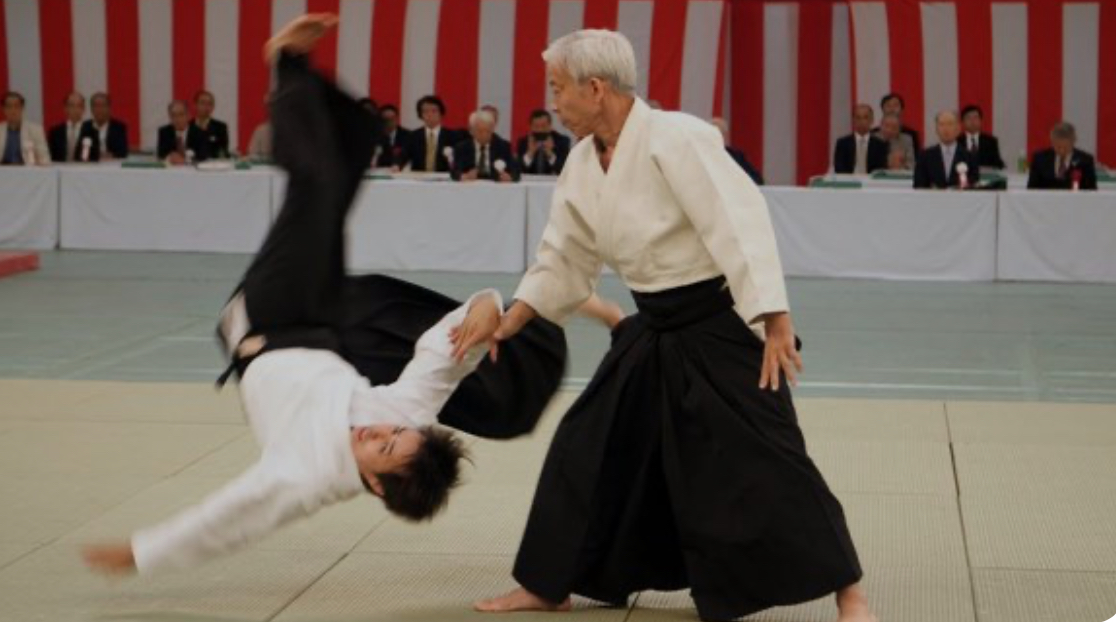
I have been experimenting with break falls in Aikido using Tai Chi for muscle repair and incorporating dietary protocols to repair muscle. Break falls are used when a throw is hard, and you land with your body directly onto a matted floor. Falling is tough and jolts your body, and many people get injured.  Many older students, who are, mind you, not much older than me, have cautioned me from doing too many break falls, and all of them have difficulty with parts of their body, such as shoulders and knees.


At 59, I feel really good. I do have a minor shoulder injury that I've been using acupuncture and massage to heal. Weirdly, for some unknown reason, in Aikido and other martial arts, many people do not take advantage of science-based methods of body restoration like nutrition, massage, acupuncture, and therapeutic movement.


This whole experiment is fun. I'm figuring out how to use quality protein intake, nutrient timing, Tai Chi, acupuncture, and massage therapy to heal my body and allow me to access my full potential. Specifically, going to regular acupuncture has afforded me quicker recovery, which allows me to work harder with fewer layoffs. So I can make exponential progress in skill development and body toughness. The injuries that used to make me take two or three days off heal faster, and I can return to training in a shorter period of time. 


During that time, I am not doing Aikido; I'm going for a hike, and I walk my dog, Ripley, at least two to three times a day. Sometimes, I get up to 14,000 steps per day, and I average about 10,000 steps per day. 

Another key ingredient in this is I am not stopping at all. For many years, I used to think oh, don’t push it and rest. Now, I just keep moving through it all. I have found this promotes faster healing. Rest is counterproductive and even detrimental. That said, I will go lighter on any area that feels strained, and I am careful not to reinjure those spots but I keep moving. It is important to note that overworking can backfire, so strategic rests are built into this.  


This exploration of body development has led me to an exciting discovery about nature and the universe. 

We all know the universal law of what goes up must come down, but few know the harder you work to improve, the greater you can handle tough shit and the more luck you have. Now, here is the unforgiving part: the less you work (even if it is a little bit), is a contagion because the more you let up on something, you atrophy, and then your overall capacity decreases. Your old injuries come back. The longer you sit, the greater the chance that those nagging injuries return.  

To understand it, you must understand how large data sets influence the mean. It is not about binging with a 6-mile hike on Saturday and sitting around all weekend. Consistent effort has a bigger impact on the average than one or two big activities. So, walking your dog 2 miles per day, EVERYDAY will have a great impact on your health than one 6-mile hike once per week. This is how you fool your body into doing more. You tweak the mileage little by little. Start off walking your dog 1 mile per day, every day, then increase it a little over time. The algorithm takes over because your body will tell you to do more; it will get bored with 1 mile. Then, you will have a consistent baseline to increase the mileage.   

The same algorithm can be applied to muscle building, school grades, and so much more. It is also how to improve in your career. Little improved changes over time are how the universe operates, so why wouldn't it work for you? especially knowing that the exact opposite momentum is true. That is not by making these little changes; you are declining gradually. Many people find themselves unhappy with their lives or seemingly all of a sudden with 30 pounds of extra weight. This only happens gradually. The cause is often found in the small details of one's habits, like extra snacking, extra beer or soda, or taking a rest too often. 

The tortoise knew this, and the hare did not. 


Thursday, August 08, 2024

What People Don't Get About Minimalist Shoes!

Conditioning is not abusive, but it is challenging and rough.


A major thing people don't understand about body conditioning is the principle of 1 mm at a time. It's not about binge and purge types of exercise. I remember an old friend who commented on a video of me banging my forearm against a wooden beam as an integral part of my martial arts training. Her statement alluded to me doing self-harm like I was an angry kid punching a wall.

That example sums up what people need help understanding about conditioning. Little by little, you mold your body over time.

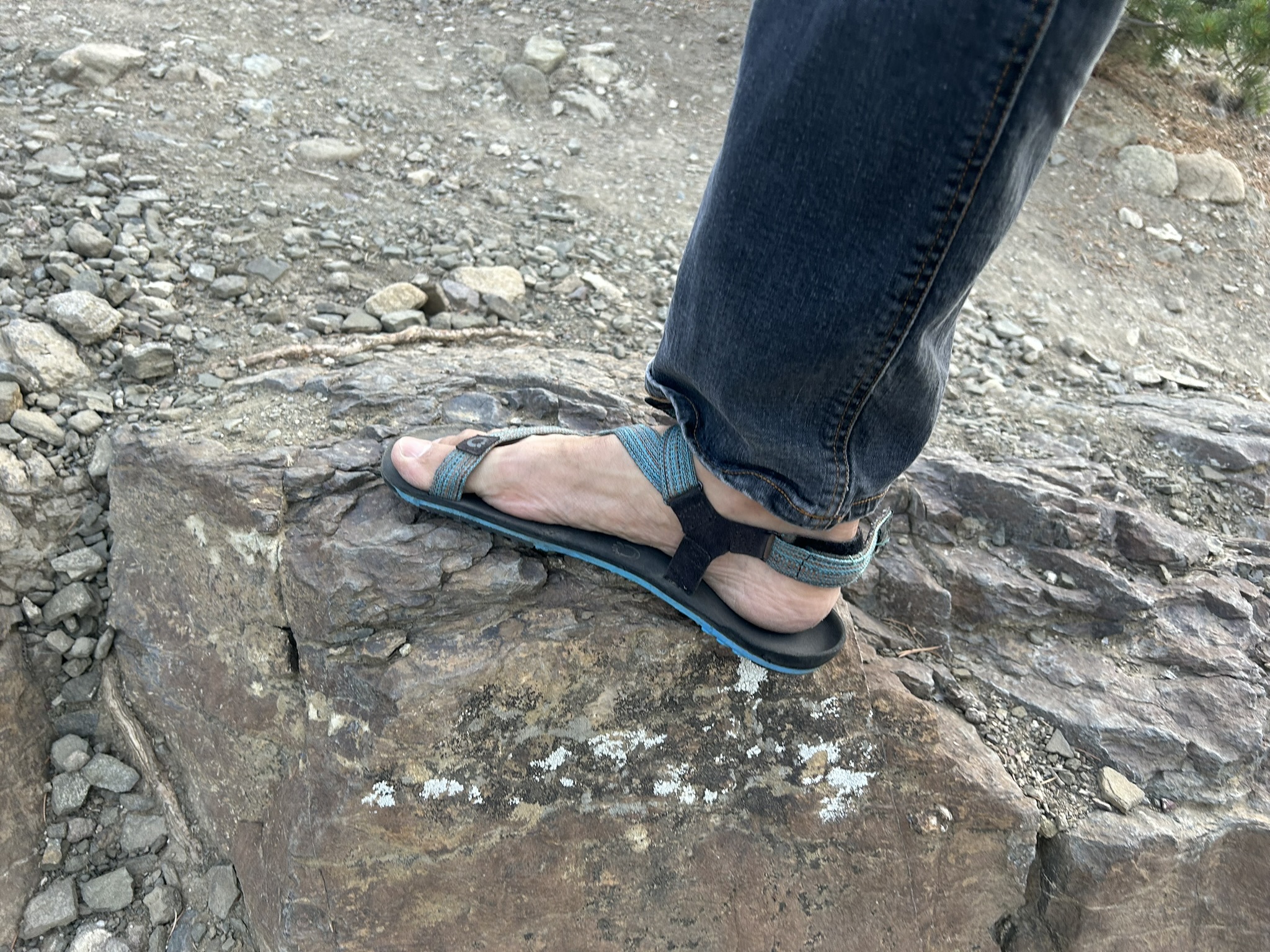
Take wearing minimal sandals on the trail in a rocky desert.
People think, “Oh my God, you're crazy!” “You are going to destroy your feet!”

They don't get that it's a skill you build up over time. Your feet get tougher and stronger, directly affecting your connection to the planet. The whole idea of putting your feet in some heavily “supported” shoe is counterproductive to conditioning your body for the long journey of life.
The more you condition your feet, the longer you can walk without discomfort. This extended walking time contributes to better overall fitness, making the journey of life more enjoyable and less painful. It's a long-term investment in your health and well-being.

Wearing minimal shoes is not just about the footwear; it's a skill. It involves strategic foot placement, which in turn reduces the risk of injuries. It's not a complex science, but for some reason, people tend to overprotect themselves. This modern trend of heavily 'supported' shoes deviates from the majority of human existence. All reactio

Sunday, June 02, 2024

Seasonal change and musical chairs


Transitioning from winter to spring, I felt like I was in a game of musical chairs, and there was an established groove from January to May. Then Memorial Day hit, and the music stopped. I was left without a seat and felt disconcerted and dumbfounded for a week. I realized that all life is changing; adapting when the music stops is what being a Tai Chi master is all about. School graduations, college kids returning home, and seasonal workers leaving are what we need to embrace. 


In Aikido, we practice Chiba Sensei’s 36 Jo basics and his choreographed two-person form, Sansho. I mention it because students (myself included) always complain that the parts do not align. It almost seems disjointed. 


This weekend, I realized that this disjointedness was intentional. From what I hear, Chiba Sensei was no slouch, and his intellect is well documented. For example, he makes you NOT step forward at the beginning of one of his 36 movements. This throws beginners off. It threw me off - it throws everyone off. My impulse was to step through, and while doing the form, I always felt awkward, like I tripped on a root. This is just one example of many traps that lie in wait for you.  


From multiple secondhand sources, I heard that Chiba Sensei abhorred rote movements. So what better way to protect your students from a lethal pitfall than to bake smaller trips and obstacles into your curriculum? The names of specific techniques don’t always match from one section to the other; the numbers of techniques and their placement in the form don’t match either. If they did you could easily coast through the whole 36, instead, you need to take a machete and cut your path through the jungle, in other words you need to earn it.  


Dunn Sensei has planted a few boobytraps of his own. On one of the walls of the Dojo, there are three paintings by a deceased and well-known painter that are easily within reach of being hit. Students beg Sensei to place plexiglass on them, but Sensei is vehemently against doing that. We need to be mindful of where we are in space and time. 


Approaching my 60s, I am embracing change and feel a little ashamed that I expected life to be consistent. 


Monday, July 24, 2023

Have you found your North Star?


When I was a kid, I saw Shogun, a TV mini-series aired in 1980. It was about an English explorer who became part of Japanese society. After it was over, I was completely taken in by the katana and Japanese culture. I was in karate, and I was already enthralled with Kung fu from that TV show, which aired in the 70s. 

I was raised by hippie parents who were always making stuff from leather. They had artist friends, and I supposed they were artists themselves. I also grew up in Brooklyn during a violent time; there were cops chasing robbers; in fact, while playing on the sidewalk, an armed robber jumped over me, fleeing from a policeman. Both men had a gun drawn. There were many other instances, but I don’t want to come across in a bragging type of way. I am creating the context of my childhood. In other writings, I have discussed the level of bullying I lived through as well.  I have always had these seemingly dual paths, that of the artist and the man of violence.  These dual paths pushed me towards new ideas and stressed the need for self-defense. 


Seeing, Shogun inspired me to make a bokken out of hardwood and start practicing cuts. I wanted to pursue weapon study further, but my Sensei didn’t teach weapons until one was a black belt. Disappointed but not dissuaded, I explored other ways to learn about weapons and frequented China Town in NY and purchased some weapons like nunchucks and staffs, etc. I knew from then on weapons would always be in my life. 


I remember sitting in karate after class, and we were all talking; well, the senior students and sensei were talking. I was listening because that was what kids did back then. I was a young 15-year-old. In the days before karate kid, there were no kid classes. You worked out with adults and sparred with them. Anyway, the highest-ranking student said he was going to Japan to study karate and live there. I remember thinking that was about the coolest thing ever. 


And here is where we get to the point of the story, deep in my heart, I was ecstatic about the thought of living in Japan, but it never occurred to me that I could actually do it.  Whether we attribute that to low socioeconomic status or low self-esteem, it seemed beyond my reach, and further, no one in my life would tell me I could actually make that happen. 


After that moment in the dojo, I went on many journeys and adventures but never made it to Japan. I am writing this mostly to my kids who don’t seem to have a direction yet, and I want to let them know how to recognize that feeling when their heart leaps and that they can make it happen. They may not get to the highest levels, but they can certainly get where they want to go. 


I am not writing this out of regret; I still practice martial arts religiously 43 years later. Not many people can say that. In some respects, my journey might be the one I was supposed to be on all along. However, it is always good to remind people, especially young people; they can pursue what makes their hearts leap. 


The idea of Japan in my heart at 15 was more important to me than actually going there; perhaps that idea was a rough but concrete marker for the martial path, a path that is still to this day my North Star.  


Wednesday, November 30, 2022

Insulin and your health


Insulin helps blood sugar enter the cells, which your body needs for energy—turning it into glucose. It also signals whether to store excess energy as fat.


What does this mean for your health?


Metabolism helps your body decide what to do with the food you just ate. If you eat a bunch of food, specifically those high in carbs and sugar, and don't exercise, insulin will tell your body to store the calories as body fat. If this happens consistently over time, you can get Type 2 Diabetes or other related metabolic disorders. Too much sugar in your blood is toxic, and it can lead to atherosclerosis and heart disease. Regularly having high blood sugar levels for extended periods (over months or years) can permanently damage parts of the body, such as the eyes, nerves, kidneys, and blood vessels. Diabetes is the leading cause of heart attacks and early death.


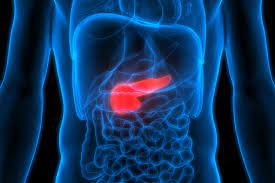
The example that I like to use is comparing your pancreas to a small restaurant that comfortably serves a dozen people and is suddenly overwhelmed with 100 customers. That small restaurant can get through it a few times, but if it is constantly being overwhelmed with more people than it can handle, eventually, the staff will quit. One thing the restaurant can do is set up a maître d', which can help regulate the number of people being sat at tables and orders of food.  

If you have a normal functioning liver and pancreas and are steadily using energy by exercising and eating moderately, your body isn’t storing much fat. Said another way, if you are not overwhelming your body, you will allow your liver and pancreas to handle the inflow of food, and you will be in balance. But if you consistently are not exercising, not using the energy up, and adding more processed carbs and refined sugar, eventually, your pancreas will give out.


Why are our bodies susceptible?


Overwhelming your liver and pancreas is a problem because, for most of human history, there was not enough food, and especially, carbohydrates and sugar were difficult to come by. A good example I use is for hunter-gatherers to get honey; it was quite a labor-intensive activity. First, you had to find a beehive. Then you had to climb the tree; if you needed smoke to disorient the bees, you had to make a fire by hand. These are all high-calorie expenditures. Said simpler, IT WAS HARD WORK. Once you got the honey and woofed down a couple of pieces, you would share some. Also, the bees don't have that much honey available in their hive, so if you wanted more, you would have to find another hive and repeat the whole process, or you would have to forgo honey. Adding to this, you wouldn't want to decimate your food source, so you would ration it and save it for later. 


The same goes for dried fruit. The same issue occurs with drying fruit. First, fruit only lasts for a while, and you must store it. Second, you still have to process it, which is work. How much could you process? On the Pueblo, I often see homes with drying racks, but I usually see one or two. That isn’t a lot of fruit. 


Nature was our dietitian and our fitness coach at the same time!


Now that we've industrialized food, we can go to the store, buy 20 jars of honey, and consume them all in a day. Unfortunately, our liver and pancreas did not evolve to process/digest/metabolize all that sugar in that short of time. 


The same thing happens with dried fruit; I could purchase bags of dried blueberries, cranberries, and cherries and consume them all in a day. I have reduced the time and labor to almost zero.  


So this massive radical change in our food system forces our liver and pancreas to go from a small restaurant that handles a dozen or so people to corporate-level dining. This is really the food problem we are facing now.  I hate to simplify things, but it is literally a problem of scale. 


I've just outlined a scale issue, and our bodies are not up to scale! 


What can you do? 


So the problem is easy to identify. The hard part is instead of nature determining what you eat and how hard it is to get food, you have to step in and regulate your intake.  


There are many diets out there, but the first step needs to be eating less refined carbs and less sugar. I would completely cut out juice and soda. And alcohol. 


Soda is a direct sugar infusion into your liver, making it particularly bad for your body. There has to be some level of caloric restriction, and that means going without eating. You have to tell yourself, and I always do this for myself. I tell myself it's OK to be hungry. There's nothing wrong with it with going to bed hungry, especially in this day and age. Second, you do have to be active, and it doesn't require running marathons or being a bodybuilder. You just have to be active because that starts the reverse process of burning the energy that is stored as fat, and you can't reward yourself with a snack because you will never burn the stored fat. 


As I mentioned, one of the roles of insulin is signaling the body to store energy as fat. Understanding this vital function is an opportunity to get involved in your health and start reducing damage to your liver and pancreas. 


Wednesday, September 30, 2020

Nunchaku and Demons

When you get to your mid fifties, you start  spending a lot of time being nostalgic and realizing those moments when you strongly connected with something because they are rare. 

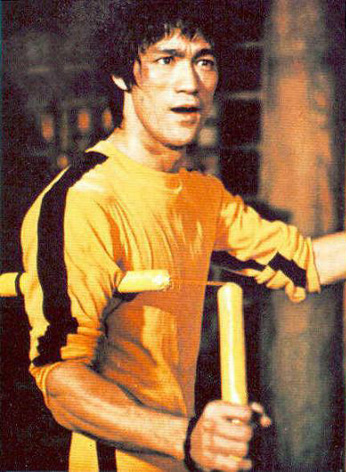
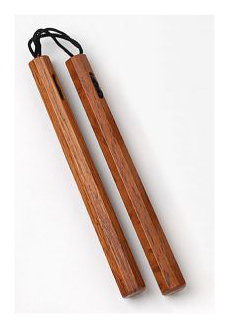
One of the first things I developed a strong connection with was the Japanese white oak, octagon-shaped nunchaku. They had such an aura for me, they almost became sacred. That moment in Game of Death, when Bruce Lee pulled out nunchaku in his fight against Dan Inosanto was electrifying. I made a pair as soon as I came home from the movie. 


Then, as I researched them and bought books, it was Fumio Demura and those Japanese white oak octagon ones with a cord attaching the two with a hidden knot that took me to a whole new level. I remember learning to tie that knot. Moreover, those 8 flat sides felt so powerful in my hand and I felt invincible as I practiced in my back yard.  


The nunchaku represented control and power. In a time when I was getting beat up and picked on as bullies used their power to put others down; so they could lift themselves up. I saw the nunchaku as a tool to turn the tables on my bullies to say, “Fuck no, you aren’t doin that to me!”   


And it worked. Even though, I never had to use them in a fight in high school, they meant more than simply fighting. They became the very idea of empowerment, of using a tool to equal the odds. In another movie, Bruce Lee used them to fight off a gang of armed attackers. This was powerful to me. It meant I could buy two pieces of wood and a simple cord and make a weapon that could defend against a gang attack, a nightmare for many. I knew at once my role in life, and even more importantly, who I was. It meant that by any means necessary someone was not simply going to walk into my life and control me. They weren’t going to take my life, or my loved ones easily. They would have to fight because I was going to fight. 


During my 20s and 30s, there were several times I needed a weapon to dissuade someone from trying to do me harm. And deeper still, there is the larger battle inside every man and it is with one’s fear of death by other men. It becomes the ritual of defeating one’s own imaginary demons. These demons can look like a home invasion or a gang of men or an evil serial killer and your mind conjurors these demons to set upon you. True martial arts uses these demons to challenge themselves via the mastery of weapons.  


Once you continually face your demons you can achieve peace and realize more of your true self and align your self with essence of the universe. This is the way.


Tuesday, July 21, 2020

Getting lost in infinity


Practicing martial arts forms on the deepest level manifests your cosmic kung fu training teachers. They train you. They are the cosmic ancient masters and their accumulated experiences are held in two different places, one in suspended animation in your DNA and second in the specific martial patterns. Once these are linked, the secrets can be unlocked through a deep visceral training of the ancient forms. 


After I was done with fighting highschool bullies, I realized fighting is not healthy. I ran to the Yin side to pursue the arts. I had grown up in an artistic household and thought this path would offer me the most out of life. It seemed an exciting choice and coincidentally not much different than martial arts with its physicality of moving the brush, charcoal, or chisel.


 Again, I heard those ancient voices but there were also voices of temptation like Lorelei whispering to travellers in the woods. I was soon coaxed into territories deeper than I could fathom, listening to the whisperings of lost souls whose threads were not connected to the ancient voices, my tether was cut and I was free floating in infinite space.

Floating in limitless space you brush up against those who are also untethered and there you can experience extreme connection but it is only temporary. Everything seems to fall apart and nothing lasts. Although this is true for much of the things found in life, there are however, some things that are rock solid and indestructible. Religions speak of such structures but, words can only be of little help. 


In martial forms, we walk with the ancient masters without form and our souls touch their footsteps. Those footsteps lead us to the energetic cathedral which forms the structure of the universe. This is indestructible and always changing.This is the place to reside. 


Chris Aloia, July 21, 2020


Tuesday, May 19, 2020

A Small Epiphany about Animal Consciousness


Recently my wife mused aloud questioning what could be occupying our pet's minds. I quickly brushed it off saying that all they think about is food. Since it was a rainy weekend and I had time, I decided watch a few TED talks on animal consciousness. One talk was given by Carl Safina, a noted writer on animal ecology, who wrote a book entitled Beyond Words; What Animals Think and Feel. Here is a link to the video  Not too far into the video, he made me feel foolish about giving short shrift to my wife's question. I also watched a few others but for the sake of brevity and clarity I will just stick to the one video. So not only did I immediately feel foolish, I also decided to open my mind and that simple but difficult action was like the sun bursting through the clouds on a rainy day. This inspired me to take my dog, Chewie (Short for Chewbacca, my kids are Star Wars fans) out in the back yard and let him wander around, while I did some T'ai Chi. During the practice I felt a deeper level of awareness of my whole body, as I moved through the T'ai Chi form. I felt these physical epiphanies before but, this time I felt increased neural connectivity.

In addition to greater connectivity, I became poignantly aware of the tightrope walk between flight or fight responses and more graceful responses. This fertile place of true realization in the moment that doesn’t stick around too long is what T'ai Chi cultivates. T'ai chi in combination with some other more direct combative training is a great match for walking that tightrope. Some might and some have questioned why practice T'ai Chi at all. 

I still practice it for three reasons: one, it makes my mind and body feel connected and that feels great; two, the research says T'ai Chi is good for injury prevention and pain management; and thirdly, I believe T'ai Chi develops a deeper understanding of form and biomechanics and forces me to think about movement efficiency.

When my practice was done, I got a bow saw and cut a freshly downed branch of tulip poplar into smaller throwing size sticks, and threw one about 70 feet, so my dog could fetch it. He was in heaven, prancing about with that stick in his mouth. We just played and enjoyed the freedom of the moment. I am usually very critical, almost cynical about TED talks, but I have to admit watching that TED talk about animal consciousness really helped me become more aware of his sentience as well as my own.

Monday, November 18, 2019

Reminiscing About How I Found Martial Arts

I was lucky that I grew up in the 70s and 80s when Asian culture, particularly martial arts, was becoming popular in the US. With the popularity of Bruce Lee movies, and the TV series Kung Fu it almost became a prerequisite to have a martial arts fight in many TV shows. I remember waiting for those fight scenes with great anticipation.

Additionally, my father was practicing Tai Chi from Robert Chuckrow and he took me to one of his classes. I remember watching him and his friend practice the Tai Chi form in our yard. My father even tried to get me to stand in a Tai Chi posture and it was really uncomfortable.  I was so rambunctious I was definitely not ready for the slow practice of Tai Chi. Then in the 80s, the TV mini-series, Shogun came on and I made myself a bokken and practiced cuts with it. I was so excited by Asian culture and swords that I really wanted to learn more.

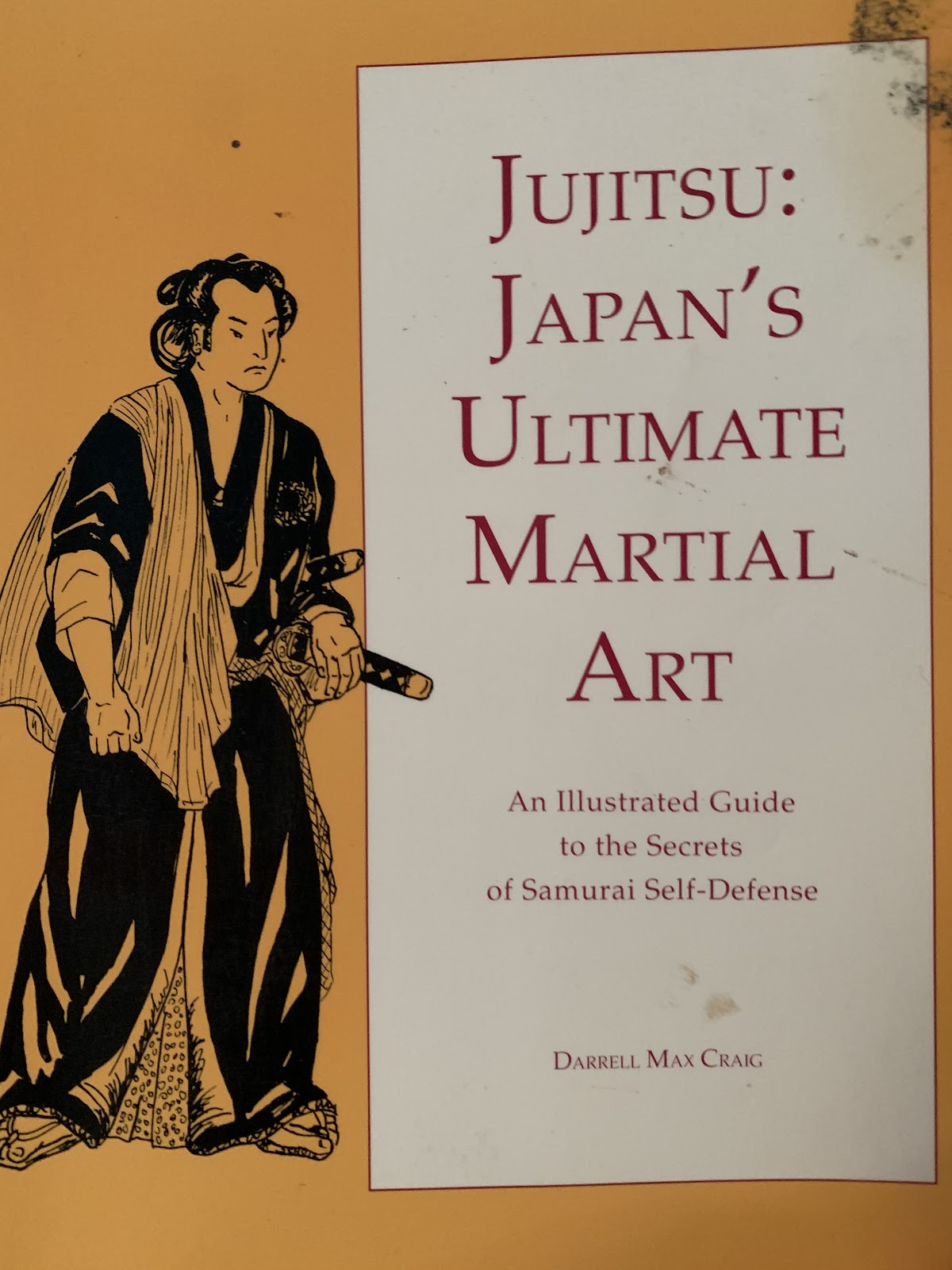
All that media exposure sparked me to explore further and I remember going to the local book store and checking out the martial arts section. It was only a few books and there was an orange book, much like this one pictured, that had historical illustrations of old time Jujitsu techniques. I bought it and became enthralled with those mysterious techniques. I tried to understand them but I couldn’t figure out the movements from the illustrations alone. 
Japanese Jiu-jitsu - Tuttle Publishing

I looked in the yellow pages and I remember seeing an advertisement for an Aikido class in a neighboring town. It seemed like it was a thousand miles away. Then I saw that our town had a Karate school so I did not have much choice. I ended up in Okinawan Goju ryu class and got my yellow belt. I remember the sensei telling us stories of the Okinawan masters he learned from, while in the military in Japan. Unfortunately, the school soon closed but luckily I found people who were into boxing. So I was still in the martial arts. However, in the back of my mind I still wanted to learn those traditional techniques found in Jujitsu and Aikido. After a couple of years of boxing I quit fighting all together. 

I had met some famous old boxing champs and realized that fighting and getting hit repeatedly in the head was not a healthy lifestyle choice. I forgot about the self development aspects of martial arts and boxing didn't teach those. So I thought I was done with the martial arts path. 


As I continued to explore other aspects of myself and grew as an adult, I once again saw a need to get back to martial arts.

This time I was in Seattle and there I had my pick of almost every imaginable martial arts style. I lived close to the International District and visited all kinds of schools offering Kung Fu, Brazilian Jujitsu, Hapkido and Aikido. I finally had my opportunity to study Aikido and learn those amazing mysterious techniques I dreamed about as a kid. So after many years I began learning everything I could and practiced intensely. Plus, there was a great group of people and we quickly became friends. The camaraderie at the school was a amazing.
 
Martial arts always came to my life in times when I needed guidance. In martial arts there is this important work being done that touches you on every level from the social to a deeply intimate and most personal. There is something compelling working out with people in a friendly but challenging manner that I have only found in martial arts.  I am very thankful that I grew up in a time when it was accessible to me. I honestly don’t know what I would have become had I not found the martial path.

Wednesday, September 18, 2019

Spiraling Patterns in Tai Chi (Notes from class on 9/17/19)


Yesterday in class, I discussed thigh rotation during Tai Chi movements. In the illustration from Chen Style Tai Chi, it depicts how your body should coil during most movements.


One exercise I use in my warm-ups is the reverse punch (Seen in the illustration below). Many people think the reverse punch is obsolete and a waste of time. However, they miss an important point, it is not directly for fighting but for training the body to coil, which is storing and releasing power. 


In fact, most of the reason why Tai Chi is performed slowly is to understand how this spiraling force is transmitted from one part of the body to the other without having gaps or hiccups, which can be exploited by an external force. This slow spiral movement also "ties" up the joints to protect them by keeping them aligned.
This is why Tai Chi is particularly good for balance, because it develops a counter spiral which "locks" the body into a stable structure. The lines in the Chen Style illustration show how force moves through the body, and of course, it is a spiraling motion, which follow patterns found in most organic structures because we live in a spiral universe and on a rotating planet.

When performing the reverse punch over time you will see every part of your body from your feet to your hands embodying a spiraling motion.  

Wednesday, July 17, 2019

Kayaking trip: father and son bonding in the computer age!


I have two sons, both of whom are ADDICTED to video games. My 14 year old has even cried when we have taken them away and said he hates everything else about life. Well, hearing that scared the crap out of me and my wife.

Additionally, my son has been doing typical teenage smart ass stuff, eye rolls and all. So it has been a little rough since he turned 13. It is not horrible but it is tough. Overall, he is a good kid and we love him to death. He does well in school, completes homework, and helps out with chores (but not without an argument about how stupid chores are).

So Easter 2018 weekend, I told my wife all I want for my upcoming birthday is to go Kayaking with her and the kids.

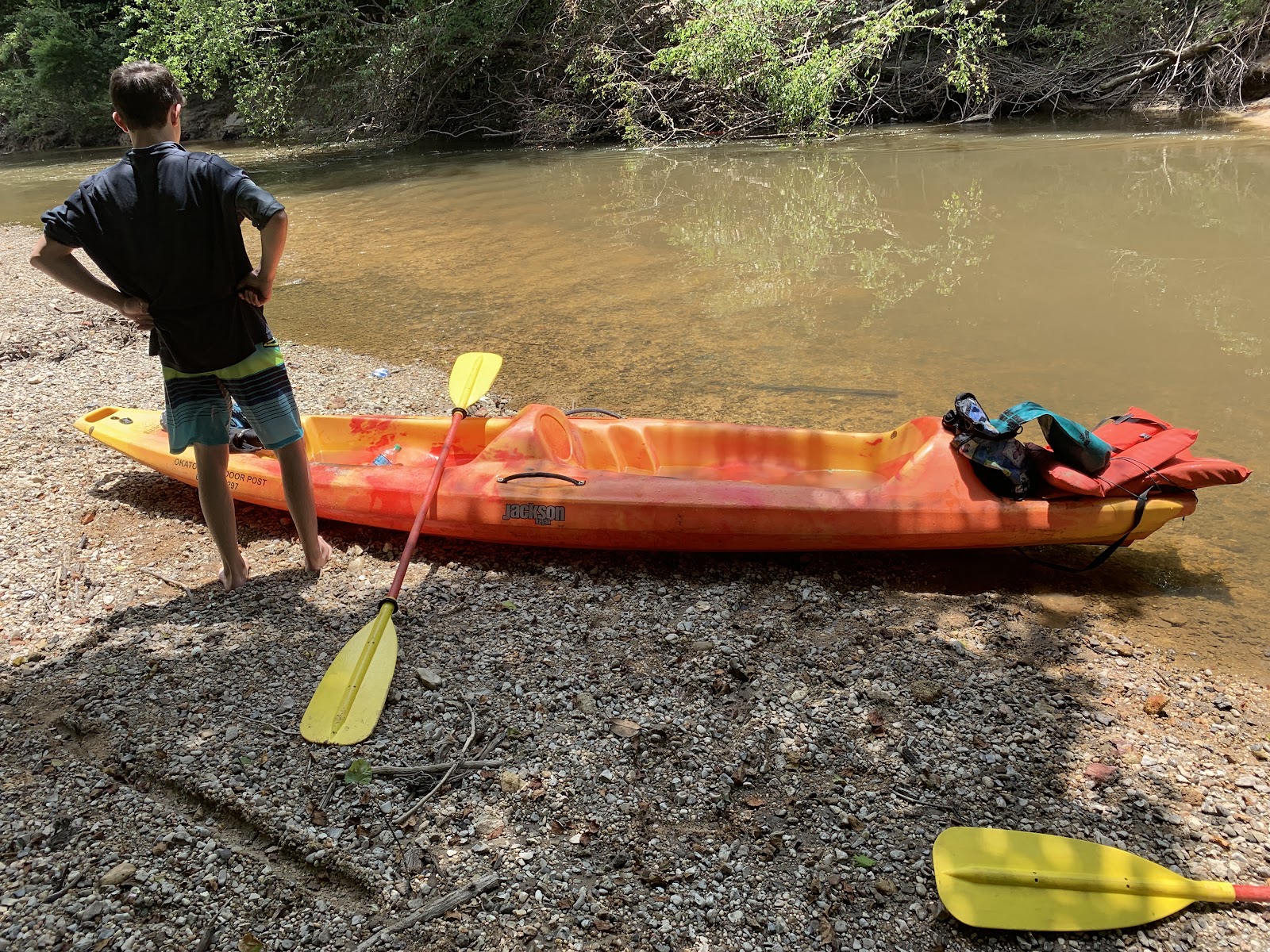
I was shocked when my 14 yo wanted to ride with me and surprisingly, we made great partners. I was so proud of him. He actually handled the turns and rapids really well for his first time. The whole trip he said, we have to come back and do this again. I felt so good and I felt like I got my son back. When he was younger we did everything together.  Needless to say this was the best birthday present ever!

When school got out in 2019, we found ourselves with the same battles and arguments. I saw an opportunity for just him and I to go kayaking again. And again it was really special. He really has a sense of adventure. It is so nice to share that with him. There are moments during any kayaking trip where there is a sense of danger, especially when seeing the on-coming rapids, rocks and debris. We work together to navigate it and shout out directives to each other. This is a great opportunity to bond but also to provide an example of how to deal with danger. I complimented him often and we teased each other some. There was a moment when he realized I am not such a bad guy. He joked back, saying that he has been doing the lion’s share of the rowing, with an obvious smile.

I could tell he needed to be in a real situation with me. So we can become accustomed to each other at a different stage in our lives. As adults, we take it for granted because we raised our kids from infants and we provide everything for them. Things that are obvious like meals but also things not so obvious like school applications, vaccinations and plane tickets etc, seem like magic to them; they just appear. What I am getting at here is that they don’t remember everything we have done for them and I think we have a tendency to demand respect and appreciation but they don’t remember all that little stuff. They need to rebuild the respect and connection, while we are placing more rigorous demands on them.

So being in semi-dangerous situations affords us the opportunity to build that connection and appreciate each other in a new context. I have found, just with these two trips, one was 3-4 hours and the other was over 6, that we came out of the river with much more love and respect for each other than before we went in. 


Another benefit of doing these trips is it is an opportunity to talk about other things and also share skills like survival skills that could potentially be needed. Whenever I go kayaking, I bring a couple of knives like, a Cold Steel Pro-lite folder or an Ontario Rat 1, which I keep on my person. I also bring other gear I keep in a dry bag as a backup. I also gave my son one of my knives to carry on him and gave him some simple instructions on how to use it and when he should use it. I discussed with him the potential of me getting hurt and what he would have to do. I made it fun to keep it from being another boring lecture. Kayaking also lends itself to a good life lesson, one of the things my son had trouble with was the importance of setting the right trajectory as you get to a bottle neck in the river. Since the water is moving fast and if you are on the wrong trajectory you could end up stuck on the rocks, flipped over, or eating a bunch of branches. 


I used this lesson to compare it to life and school work. While, schoolwork is boring and you want to wait until the last minute, sometimes that isn't enough and you could end up not getting into the college you want or missing an opportunity that you really wanted. I didn't drive in home hard but I did connect the dots.


Since kayaking is loved by everyone in the family, we  have decided that this is going to be one of our family activities and my wife and I discussed purchasing our own kayaks. We are also researching how to work out the transportation of them. 


Now, I feel like arguments and screaming matches are a cry for a new way of reconnecting and a new challenge rather than a downward spiral towards family disintegration.

Here’s to new hope!!!

6 reasons why the Mora Bushcraft Black is my number one favorite fixed blade.


1. Mora carbon steel takes a fine edge that can easily be brought back to shaving and I have found this to be reliable on all their knives I have owned. The other day I saw some rubber hanging below my car. So I grabbed my Bush Craft Black and started cutting the rubber. I kept trying to cut it but it wasn't budging. I looked at my knife in horror, and I realized the entire edge looked like a boxer's teeth, craggily AF. I checked the rubber and it had a steel core. I immediately went inside using only my ceramic rods and after a moderate amount of work, the edge was back to shaving sharp. Mora's carbon steel is one of the few knife companies I trust, so I keep coming back for more.

2. The handle is so comfortable. I can carve feather sticks for a long time with less fatigue than other knives. Plus the design of the grip really allows the knife to rest in a perfect position in my hand. Sometimes I just want to hold the knife because it feels so good.

3. The 90° spine is the sharpest of all my knives. I have used it countless times and it bites deep into the ferro rod giving me the most sparks of all my knives. It does have to be maintained with a stone every so often but it is still the sharpest out there.

4. It is lightweight. In a package that tics all the important boxes, like steel quality, comfort, usability, a good price, it is also lighter than other knives. Another benefit of it being lightweight is that when you have it on your belt you don't feel like it is dragging you down.

5. Another feature I like that is unique to Mora, is there is no ricasso, or choil, so you can get right up to the guard when cutting. Just to clarify, the ricasso on a knife is the space between the handle or guard, if the knife has one, and the cutting edge. The choil is a little (usually little) notch that allows you to sharpen the edge without the stone rubbing on the ricasso (see picture below). Sometimes people confuse the two and sometimes knifemakers enlarge the choil to allow for a finger to be placed there. It is really amazing how few knife companies do this. I find it makes sharpening easier and it provides more leverage for carving too. Also, the notch doesn't catch on things you are trying to cut. For a good article on choils click here .
Image result for fixed blade knife parts ricasso

6. Another great thing about Mora is they relatively low cost, which means you can get a great knife within your budget. That also means you can use it and not feel like you are destroying a family heirloom. They are a tool to be used not kept locked up for future generations. 

All of these great things about Mora also add up to making easier to having the knife on you when you need it. This week, there was a story of a 69 year old woman, who got separated from her husband while camping and was lost for 3 days in the wilderness without anything. Having a small fixed blade and a few other supplies on your belt, like a ferro rod and some cordage could have really helped her. She survived but was severely dehydrated and in need of hospitalization. It is a good reminder that having a few tools and a little knowledge on how to use them could make the world of difference. I would definitely recommend a Mora Bushcraft black for any hiker to carry into the woods, even for a day hike.


Thursday, June 20, 2019

Between Postures: Where the Gold in Tai Chi Is Mined!

 Every so often during practice I will have an epiphany about some aspect of the Tai Chi form or a particular movement within.  When it happens I feel like I have gotten closer to uncovering the mysteries of Tai Chi. As I continue to explore an epiphany I soon realize that it has already been thoroughly explained in Yang Cheng Fu’s 10 Important Points. This week was no different. In the past few classes, we had been working on the gap/transitions between Tai Chi postures, particularly from Single Whip to Wave Hands Like Clouds but it is in all transitions. Often someone learning Tai Chi will automatically go from one move to the other will little thought or activation put into the transition, thus creating a gap in their structure. Specifically, Yang Cheng Fu expounded upon my epiphany in number 8 and number 9 of his 10 Important Points. Number 8 discusses the importance of harmony between the internal and external parts and number 9 discusses the importance of continuity while going from one posture to the next.


Single Whip
What separates Tai Chi from other exercise routines is once the form has begun the training is the transition from one posture to the other seamlessly. I have found understanding the martial aspects helps focus your attention on those transitions because transitions or gaps are vulnerabilities. In analyzing transitions in the Tai Chi form there are two basic categories. Hand transitions (moving from one side to the other or raising one high and one low) and stepping transitions.


Hand Transitions

Two postures that make a great example are Single Whip to Wave Hands Like Clouds. When you strike with your left hand/forearm (at the 12:00 o’clock) position in Single Whip, your right hand is extended outwards perpendicular to your left, creating a right angle (at the 3:00 position). As soon as you have reached the apex of that left hand strike (12 o’clock position otherwise known as absolute yang), your energy should slowly dissipate from the left hand (and start moving toward yin), as you sense an attack coming at your 4:00 o’clock position. So you begin to rotate your body to face that attack. Your right hand becomes activated and dominant (now yang) while your left comes to support the right, which begins the Wave Hands Like Clouds sequence.

The beginning of Wave Hands Like Clouds


Stepping Transitions
When moving from one posture to another you are transferring weight from one leg to the other, as you propel forward. During most Tai Chi movements there is a point where you must place 100% of one’s weight on one leg as you step. In the form, we practice weight transfer extremely slow to develop strength and stability.

We analyzed our stability when changing hand positions, but how strong are we when taking a step? The answer to this requires a two-part response. First, you would ONLY enter when you see a gap in your opponent’s defenses, and secondly, when you do see that opening you must do it swiftly, like a hawk seizing a rabbit.

To discuss entering it is important to tie it in with my boxing days. Entering is a lesson learned the hard way and it was ingrained upon me in two ways. In that awkward period when you are first learning to fight and you try to get close enough to punch someone, you quickly realize that you are also able to get hit. A lot of fear is generated and leads to stopping you from moving. You want to end the encounter, but you have to enter to do it which exposes you to a counter attack and harm. Many boxers, myself included, were told to never cross legs when moving, because you may get hit when doing so and your base will collapse, resulting in a knock down at the very least.

The important aspect of Tai Chi that is often overlooked is timing, because many Tai Chi people have never had to fight. A good example to understand timing is jumping rope; to jump over the rope at the exact time the rope should be right in front of your toes. If you jump too soon, you will land before the rope passes and if you jump too late you will get hit by the rope. In a self defense situation, the movements are hyper dynamic and the attacker doesn’t follow the rhythms of the form. It is those rhythms of entering either to the outside or the inside and look for openings with a decreased chance of getting hit while doing so. It is that “beat” which needs to seamlessly change with weight transitions. A true self defense or combative training session will work more on the timing of entering than memorization of a choreographed routine.

Transitions are where the gold of Tai Chi is mined. With training, anyone can assume a posture or stance but to carry the mindful focus of the dan tian and using the kua to transfer energy from one part of your body to other takes real concentration and effort. This is why Yang Cheng Fu includes continuity in transitions in his ten important points. It is also why I included his 8th point, “harmony between the internal and external parts”. You can’t transition if you have no smooth energy flow from the right to the left side of your body, nor can it flow if internal and external parts are not in harmony. Working on that harmony is the gold of Tai Chi, it is the neija or internal work that needs to be worked on to grow.

In sum, the form is a great general training tool but it will not fully prepare you for a dynamic encounter either with an opponent or in life situations that could arise. If you include mindful transitions into your form it will help you understand the need to focus and place attention on weaknesses in your form. It will inspire you to incorporate transitions and timing drills into your practice.