Showing posts with label Fitness. Show all posts

Thursday, October 09, 2025

Tai Chi The Missing Element in Bushcraft and Wilderness Survival


I believe Tai Chi is an essential element for the Bushcraft and wilderness survival community.

Most conversations around survival skills focus on physical conditioning, endurance, and toughness. And yes, it is true that the fitter and stronger your body, the better your chances of surviving a difficult situation. A body that can climb, hike, and carry under pressure clearly performs better in the wild.

But what often gets overlooked is the other side of that equation, relaxation, awareness, and injury prevention.

Relaxation as a Survival Skill

Bushcraft is not just about endurance or fighting the elements. It is also about sitting by a fire, carving a spoon, cooking, or making something with your hands. These moments of calm are psychologically grounding because they connect us to how humans have lived for thousands of years, working with nature, not against it.

The typical Bushcraft demographic tends to be men over forty. We love the outdoors, the gear, and the process. But at that age, we are also dealing with knee pain, tight backs, and shoulder stiffness. This is where Tai Chi becomes a perfect companion.

Injury Prevention and Healing

Tai Chi is not just slow movement; it is functional movement. It retrains the body to move with balance and coordination. For people with decades of habitual movement patterns, that is huge. The practice helps loosen old injuries, restore range of motion, and strengthen connective tissues gently.

When I am out in the field or camping, Tai Chi keeps me loose and mobile. At sixty, after thirty years of Tai Chi and twenty years of Bushcraft, I can say this with certainty: my recovery is faster, my movements are smoother, and I can camp and hike longer without pain.

Heightened Awareness and Perception

The second major benefit is awareness. Tai Chi opens up your senses. When you move with focus and controlled breathing, your vision and hearing expand rather than tunnel in. You shift from narrow task focused awareness to peripheral environmental awareness.

That is survival gold. When I am practicing Tai Chi in the wilderness, I notice birds, wind shifts, and subtle patterns I would usually miss. If I ever lose an item in camp, I will do a few minutes of Tai Chi before searching. It calms me down and helps me see what is actually there, not what I am panicking about.

Trail runners and hikers often miss this. They are moving fast, chasing performance. Tai Chi slows you down enough to truly connect with the environment.

Breaking Old Patterns

Most people do not realize how deeply their movement patterns are shaped by decades of habit. Tai Chi breaks those unhealthy loops. It teaches you to move with fluidity, not tension, and that translates directly into how you carry a pack, swing an axe, or gather wood.


Yes, the learning curve is slow. You will struggle with balance and coordination at first. But that struggle is the point. You are rewiring your nervous system to move the way humans were meant to move, efficiently, quietly, and with awareness.

Final Thought

Bushcraft is about more than surviving. It is about living well in nature. Tai Chi completes that circle. It builds a strong, supple, and relaxed body, a mind that is calm under pressure, and an awareness that tunes into the natural world.

For me, Tai Chi is not just a martial art. It is the missing link in wilderness living.


Friday, August 09, 2024

The Unforgiving Algorithm of The Universe

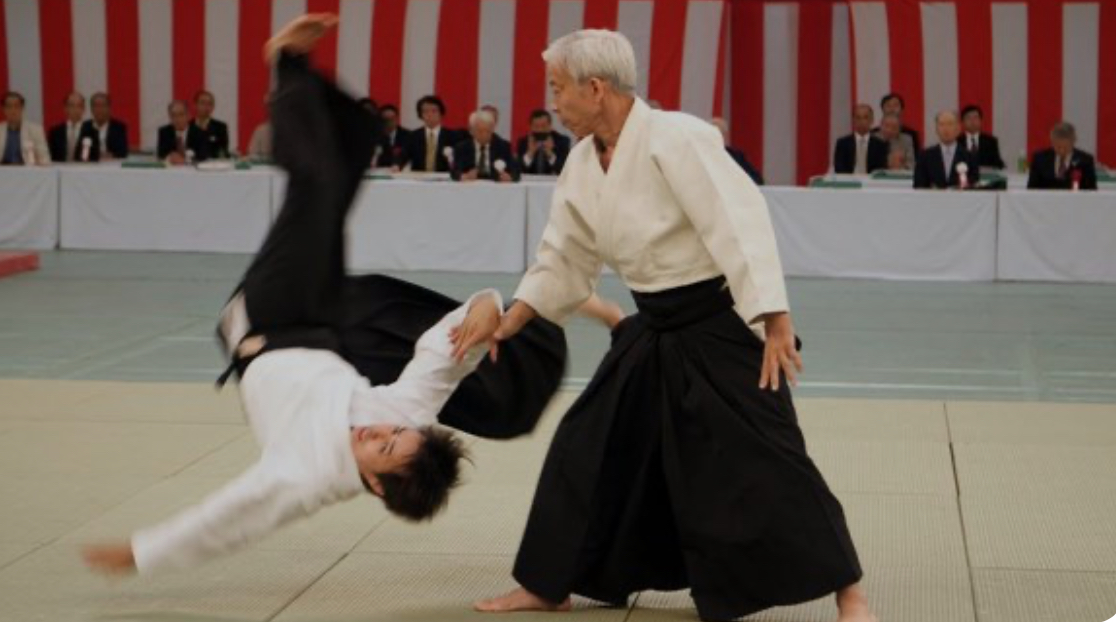
I have been experimenting with break falls in Aikido using Tai Chi for muscle repair and incorporating dietary protocols to repair muscle. Break falls are used when a throw is hard, and you land with your body directly onto a matted floor. Falling is tough and jolts your body, and many people get injured.  Many older students, who are, mind you, not much older than me, have cautioned me from doing too many break falls, and all of them have difficulty with parts of their body, such as shoulders and knees.


At 59, I feel really good. I do have a minor shoulder injury that I've been using acupuncture and massage to heal. Weirdly, for some unknown reason, in Aikido and other martial arts, many people do not take advantage of science-based methods of body restoration like nutrition, massage, acupuncture, and therapeutic movement.


This whole experiment is fun. I'm figuring out how to use quality protein intake, nutrient timing, Tai Chi, acupuncture, and massage therapy to heal my body and allow me to access my full potential. Specifically, going to regular acupuncture has afforded me quicker recovery, which allows me to work harder with fewer layoffs. So I can make exponential progress in skill development and body toughness. The injuries that used to make me take two or three days off heal faster, and I can return to training in a shorter period of time. 


During that time, I am not doing Aikido; I'm going for a hike, and I walk my dog, Ripley, at least two to three times a day. Sometimes, I get up to 14,000 steps per day, and I average about 10,000 steps per day. 

Another key ingredient in this is I am not stopping at all. For many years, I used to think oh, don’t push it and rest. Now, I just keep moving through it all. I have found this promotes faster healing. Rest is counterproductive and even detrimental. That said, I will go lighter on any area that feels strained, and I am careful not to reinjure those spots but I keep moving. It is important to note that overworking can backfire, so strategic rests are built into this.  


This exploration of body development has led me to an exciting discovery about nature and the universe. 

We all know the universal law of what goes up must come down, but few know the harder you work to improve, the greater you can handle tough shit and the more luck you have. Now, here is the unforgiving part: the less you work (even if it is a little bit), is a contagion because the more you let up on something, you atrophy, and then your overall capacity decreases. Your old injuries come back. The longer you sit, the greater the chance that those nagging injuries return.  

To understand it, you must understand how large data sets influence the mean. It is not about binging with a 6-mile hike on Saturday and sitting around all weekend. Consistent effort has a bigger impact on the average than one or two big activities. So, walking your dog 2 miles per day, EVERYDAY will have a great impact on your health than one 6-mile hike once per week. This is how you fool your body into doing more. You tweak the mileage little by little. Start off walking your dog 1 mile per day, every day, then increase it a little over time. The algorithm takes over because your body will tell you to do more; it will get bored with 1 mile. Then, you will have a consistent baseline to increase the mileage.   

The same algorithm can be applied to muscle building, school grades, and so much more. It is also how to improve in your career. Little improved changes over time are how the universe operates, so why wouldn't it work for you? especially knowing that the exact opposite momentum is true. That is not by making these little changes; you are declining gradually. Many people find themselves unhappy with their lives or seemingly all of a sudden with 30 pounds of extra weight. This only happens gradually. The cause is often found in the small details of one's habits, like extra snacking, extra beer or soda, or taking a rest too often. 

The tortoise knew this, and the hare did not.