Showing posts with label health. Show all posts

Tuesday, August 04, 2026


The Mountain Bike Problem: When Good Intentions Replace Good Planning

Every organization has its "mountain bike problem."


It's the well-intentioned purchase that seemed like a great idea at the time but slowly became a symbol of something much larger: planning that focused on acquiring equipment rather than building a sustainable program.

At first glance, our mountain bikes look like a valuable community asset. But today they occupy nearly half of the storage space in two storage buildings while seeing very little use. This year they may have been used once or twice. Even during summer camp, we quickly discovered that riding local roads was too basic for experienced youth, while transporting the bikes to better trails required a specialized trailer, a capable tow vehicle, insurance, fuel, staff time, and someone experienced enough to lead a safe mountain biking program.

The bikes themselves were never really the program. They were only one small piece of a much larger system that was never fully developed.

This is a common mistake in community programming. We often become excited about purchasing equipment because it feels like progress. Grants pay for tangible items, and equipment is easy to point to. But equipment without infrastructure, staffing, transportation, maintenance, scheduling, and long-term planning rarely produces lasting impact.

A successful mountain biking program isn't simply twenty bikes sitting in storage. It's trained instructors, transportation, partnerships with trail systems, maintenance schedules, safety protocols, regular outings, and consistent participation. Without those supporting pieces, expensive equipment quietly becomes expensive storage.

Sometimes the better investment isn't owning everything ourselves.

If our community only wants to offer mountain biking two or three times each year, it may be far more cost-effective to partner with an outfitter or local guide service that already owns the bikes, trailers, tools, and safety equipment and specializes in delivering high-quality experiences. Instead of spending resources maintaining equipment that sits unused for most of the year, we could invest directly in exceptional programming when it's actually needed.

This principle extends far beyond mountain bikes.

Every program should begin with one simple question:

What problem are we trying to solve?

Only after answering that question should we determine what equipment, staffing, partnerships, facilities, and budget are necessary to support the solution. Too often organizations work backward—they purchase equipment first and hope a program develops around it.

Good planning starts with outcomes, not inventory.

Before purchasing anything, organizations should ask:

  • Who will use this?
  • How often will it realistically be used?
  • What additional infrastructure is required?
  • Who will maintain it?
  • What will it cost over five years, not just today?
  • Would partnering with another organization accomplish the same goal more effectively?

These questions may not be as exciting as opening new equipment, but they are the difference between building programs that thrive and filling storage buildings with forgotten ideas.

The mountain bikes remind us that successful community programming isn't measured by how much equipment we own. It's measured by how consistently we create meaningful experiences for the people we serve.

Sometimes the smartest investment isn't buying more things.

It's planning better.

Wednesday, October 08, 2025

Lessons from the Mountains: Why Movement Heals More Than Medicine


For thousands of years, people have searched for secret cures, the perfect combination of herbs, tonics, or rituals to bring strength and longevity. In ancient China, monks were often seen as the living embodiment of health and spiritual power. People admired the elixirs and herbal medicines they gathered in the mountains, assuming their vitality came from those rare roots and plants.

But I have often wondered if it was something simpler.
Maybe their health came not only from the herbs they consumed, but from the act of searching for them; climbing steep paths, crossing rivers, breathing mountain air, and moving through nature every day. The herbs may have healed, but it was the movement that truly made them strong.

Herbs are not bad, far from it. Nature’s medicine has real value and wisdom. But no herb, no supplement, no tonic can compare to the power of consistent movement. Exercise changes the entire body from the inside out: your lungs, heart, muscles, brain, mood, and even your immune system.

The Foundations of Health (Excluding Nutrition)

For me, true wellness comes from three interconnected elements:

  1. Cardio – Expanding your VO₂ max, or your body’s ability to perform intense activity using oxygen efficiently. This builds endurance and resilience.

  2. Strength – Weight training or body resistance work to keep bones dense, joints supported, and muscles active.

  3. Mind Body Connection – The quiet, restorative side of practice, smoothing neural pathways, regulating tension, and allowing your body to recover.

Tai Chi fits beautifully into that third element. But I think many practitioners miss the full picture. In the past, daily life was cardio and strength work, people farmed, hunted, hauled, and walked everywhere. “Exercise” was not something they scheduled; it was how they survived.

My Own Practice

That is why I combine everything:

  • Tai Chi for balance, focus, and internal strength

  • Hiking in high elevations to challenge my lungs and heart

  • Weightlifting to maintain structure and power

  • Weapons training to refine coordination, precision, and the understanding of force

After decades of practice, I no longer need hour-long Tai Chi sessions every day. Instead, I integrate movement throughout life, flowing between stillness and exertion, effort and rest.

You can see my approach on my YouTube channel, where I practice in all kinds of weather and terrain:
Mountain Goat Tai Chi

Living close to high elevation gives me the perfect environment to test and strengthen my VO₂ max naturally. The mountains themselves have become my training ground, and I am convinced that movement, more than anything else, is the most powerful medicine we have.

Wednesday, November 30, 2022

Insulin and your health


Insulin helps blood sugar enter the cells, which your body needs for energy—turning it into glucose. It also signals whether to store excess energy as fat.


What does this mean for your health?


Metabolism helps your body decide what to do with the food you just ate. If you eat a bunch of food, specifically those high in carbs and sugar, and don't exercise, insulin will tell your body to store the calories as body fat. If this happens consistently over time, you can get Type 2 Diabetes or other related metabolic disorders. Too much sugar in your blood is toxic, and it can lead to atherosclerosis and heart disease. Regularly having high blood sugar levels for extended periods (over months or years) can permanently damage parts of the body, such as the eyes, nerves, kidneys, and blood vessels. Diabetes is the leading cause of heart attacks and early death.


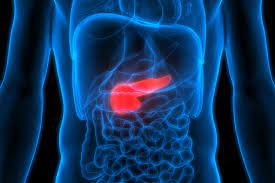
The example that I like to use is comparing your pancreas to a small restaurant that comfortably serves a dozen people and is suddenly overwhelmed with 100 customers. That small restaurant can get through it a few times, but if it is constantly being overwhelmed with more people than it can handle, eventually, the staff will quit. One thing the restaurant can do is set up a maĆ®tre d', which can help regulate the number of people being sat at tables and orders of food.  

If you have a normal functioning liver and pancreas and are steadily using energy by exercising and eating moderately, your body isn’t storing much fat. Said another way, if you are not overwhelming your body, you will allow your liver and pancreas to handle the inflow of food, and you will be in balance. But if you consistently are not exercising, not using the energy up, and adding more processed carbs and refined sugar, eventually, your pancreas will give out.


Why are our bodies susceptible?


Overwhelming your liver and pancreas is a problem because, for most of human history, there was not enough food, and especially, carbohydrates and sugar were difficult to come by. A good example I use is for hunter-gatherers to get honey; it was quite a labor-intensive activity. First, you had to find a beehive. Then you had to climb the tree; if you needed smoke to disorient the bees, you had to make a fire by hand. These are all high-calorie expenditures. Said simpler, IT WAS HARD WORK. Once you got the honey and woofed down a couple of pieces, you would share some. Also, the bees don't have that much honey available in their hive, so if you wanted more, you would have to find another hive and repeat the whole process, or you would have to forgo honey. Adding to this, you wouldn't want to decimate your food source, so you would ration it and save it for later. 


The same goes for dried fruit. The same issue occurs with drying fruit. First, fruit only lasts for a while, and you must store it. Second, you still have to process it, which is work. How much could you process? On the Pueblo, I often see homes with drying racks, but I usually see one or two. That isn’t a lot of fruit. 


Nature was our dietitian and our fitness coach at the same time!


Now that we've industrialized food, we can go to the store, buy 20 jars of honey, and consume them all in a day. Unfortunately, our liver and pancreas did not evolve to process/digest/metabolize all that sugar in that short of time. 


The same thing happens with dried fruit; I could purchase bags of dried blueberries, cranberries, and cherries and consume them all in a day. I have reduced the time and labor to almost zero.  


So this massive radical change in our food system forces our liver and pancreas to go from a small restaurant that handles a dozen or so people to corporate-level dining. This is really the food problem we are facing now.  I hate to simplify things, but it is literally a problem of scale. 


I've just outlined a scale issue, and our bodies are not up to scale! 


What can you do? 


So the problem is easy to identify. The hard part is instead of nature determining what you eat and how hard it is to get food, you have to step in and regulate your intake.  


There are many diets out there, but the first step needs to be eating less refined carbs and less sugar. I would completely cut out juice and soda. And alcohol. 


Soda is a direct sugar infusion into your liver, making it particularly bad for your body. There has to be some level of caloric restriction, and that means going without eating. You have to tell yourself, and I always do this for myself. I tell myself it's OK to be hungry. There's nothing wrong with it with going to bed hungry, especially in this day and age. Second, you do have to be active, and it doesn't require running marathons or being a bodybuilder. You just have to be active because that starts the reverse process of burning the energy that is stored as fat, and you can't reward yourself with a snack because you will never burn the stored fat. 


As I mentioned, one of the roles of insulin is signaling the body to store energy as fat. Understanding this vital function is an opportunity to get involved in your health and start reducing damage to your liver and pancreas. 


Friday, February 10, 2017

Qi Gong and Depression


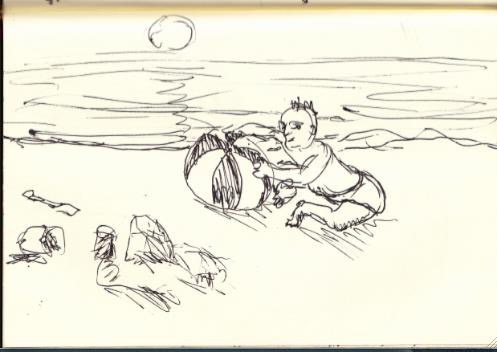
When moving to a new home, there are tons of boxes to open, inevitably you stumble across something from your past. This last move, I found an old sketch of a child playing on the beach from late 90s, quite a few years before my first son was born. I tried to remember why I kept that drawing as it is not the best drawing I have done.

During my early 30s I started to feel like I was stuck in a rut at work and I became quite unhappy for a long period. It lasted long enough for me to say to myself, I think I am depressed. I decided I needed to do something and as I was doing some Aikido at the time, I sought an alternative method of self-healing, I found this cassette tape called the Inner Smile Qi Gong set by Mantak Chia. I practiced every day and part of the set included visualization of something that makes you happy, whatever it is.

For the better part of six months of practicing, I could not fixate on anything in particular. Then after some more time, I was able to conjure children’s laughter in my mind, but only faintly. Then after more time, the sound became clearer and then I could actually see a blurry figure laughing and playing on the beach. I began to attempt to sketch it and during that process a boy playing and laughing on an ocean shore appeared in my mind’s eye. My wife and I had been married for about 5 years at that time and I never had a strong desire to have children and we hadn’t discussed it once until 3 years later. My depression soon passed and the Qigong succeeded in helping me focus on the things I wanted to spend my day thinking, doing, and feeling, and it kept me from falling back into a cycle of darkness.

I no longer practice the inner smile set anymore but I do practice the Tai chi 24 form most days of the week. I still do some 8 Brocades Qigong and a few others occasionally. Both Tai chi and Qigong help me on a daily basis with many of life’s challenges both physical and psychological. The odd thing about this story is that since finding this drawing my wife and I have two sons and I can’t help but wonder if the Qigong I did at that time provide me with a glimpse into the future. And did that glimpse abate my depression, or was it that I uncovered some lost part of myself from childhood, or was it something deeply felt but unknown within the caverns of my limbic system? I guess there is no way to answer those questions, but it does make me wonder.

Friday, August 14, 2015

Spanish garlic soup: healthy, hearty and perfect for a fall day


Almost a decade ago my family and I flew to Spain and had a hellish plane trip. We arrived in Madrid at midnight starving. After we finally got our rental car we drove to the first place that looked like it had food. When we arrived we searched the menu I remember seeing the words GARLIC and SOUP in the same dish. Even though I never had anything like it before I had to go for it. When the waiter brought out the dish I was blown away, tons or garlic, bread and poached eggs. I still remember the smells. You gotta love that amygdala.  Although it is called Spanish garlic soup I feel eggs are the star of the dish, those poached pillows of awesomeness ooze the golden protein into the broth. All I can say is amazing, restorative and delicious!  

Another great thing about this soup besides amazing taste and heartiness is that it is very easy to make. 

http://www.splendidtable.org/rec...

Salud!