Showing posts with label Acupuncture. Show all posts

Tuesday, October 21, 2025

Why I Will Do Tai Chi the Rest of My Life

I have practiced Tai Chi for most of my adult life, and while I could talk about its many well-known benefits—balance, flexibility, stress reduction, peaceful moving meditation—those are only part of why I keep returning to it.

The deeper reason is that Tai Chi helps me understand how I hold my body—and, by extension, how I carry the vibes of the world.

The Body as a Barometer

Right now, America feels tense. We are in a socially disturbed time. Every day, people on television talk about division and conflict, and it seeps into the air. You can feel it. It’s easy to walk around unconsciously bracing for impact, like we’re all waiting for something to explode.

I noticed this tension showing up in my own body. My shoulders, especially, were locked as if I were perpetually preparing to defend myself—to throw a punch, to block, to push back. I realized that even though I wasn’t in a fight, my nervous system thought I was.

Injury as a Message

Three-quarters of the way through 2025, as winter approaches, I developed a small shoulder injury. My acupuncturist believes it’s a rotator cuff issue—probably from overuse, overtraining, and years of holding tension in one arm.

That diagnosis was humbling. It wasn’t just a physical injury; it was a message. My body was reflecting how I’d been living—in a subtle, constant state of readiness.

Returning to the Practice


When I brought Tai Chi back into focus, I realized I’d been doing the movements but not fully inhabiting them. I’d been practicing in the mountains, surrounded by beauty, but I wasn’t bringing that softness, that awareness, back to the village—back to the everyday spaces where life actually happens.

Tai Chi reminded me that it’s not about escaping tension but about learning to accept it viscerally—to let the energy move through without freezing or collapsing around it.

The Daily Reset

That’s why Tai Chi isn’t just exercise for me. It’s a daily check-in, a way to notice how I’m interpreting reality—not mentally, but through the language of the body. Every session gives me feedback: Am I fighting the world today, or am I moving with it?

Tai Chi teaches me to re-enter life with less armor and more awareness.

And that is why I will do Tai Chi for the rest of my life.

Friday, August 09, 2024

The Unforgiving Algorithm of The Universe

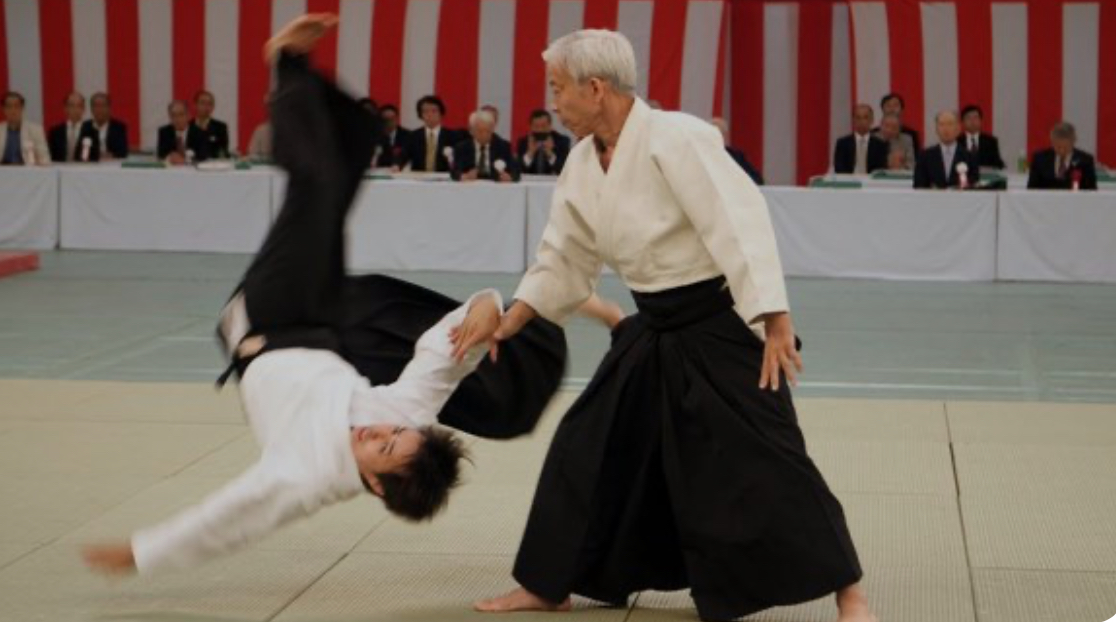
I have been experimenting with break falls in Aikido using Tai Chi for muscle repair and incorporating dietary protocols to repair muscle. Break falls are used when a throw is hard, and you land with your body directly onto a matted floor. Falling is tough and jolts your body, and many people get injured.  Many older students, who are, mind you, not much older than me, have cautioned me from doing too many break falls, and all of them have difficulty with parts of their body, such as shoulders and knees.


At 59, I feel really good. I do have a minor shoulder injury that I've been using acupuncture and massage to heal. Weirdly, for some unknown reason, in Aikido and other martial arts, many people do not take advantage of science-based methods of body restoration like nutrition, massage, acupuncture, and therapeutic movement.


This whole experiment is fun. I'm figuring out how to use quality protein intake, nutrient timing, Tai Chi, acupuncture, and massage therapy to heal my body and allow me to access my full potential. Specifically, going to regular acupuncture has afforded me quicker recovery, which allows me to work harder with fewer layoffs. So I can make exponential progress in skill development and body toughness. The injuries that used to make me take two or three days off heal faster, and I can return to training in a shorter period of time. 


During that time, I am not doing Aikido; I'm going for a hike, and I walk my dog, Ripley, at least two to three times a day. Sometimes, I get up to 14,000 steps per day, and I average about 10,000 steps per day. 

Another key ingredient in this is I am not stopping at all. For many years, I used to think oh, don’t push it and rest. Now, I just keep moving through it all. I have found this promotes faster healing. Rest is counterproductive and even detrimental. That said, I will go lighter on any area that feels strained, and I am careful not to reinjure those spots but I keep moving. It is important to note that overworking can backfire, so strategic rests are built into this.  


This exploration of body development has led me to an exciting discovery about nature and the universe. 

We all know the universal law of what goes up must come down, but few know the harder you work to improve, the greater you can handle tough shit and the more luck you have. Now, here is the unforgiving part: the less you work (even if it is a little bit), is a contagion because the more you let up on something, you atrophy, and then your overall capacity decreases. Your old injuries come back. The longer you sit, the greater the chance that those nagging injuries return.  

To understand it, you must understand how large data sets influence the mean. It is not about binging with a 6-mile hike on Saturday and sitting around all weekend. Consistent effort has a bigger impact on the average than one or two big activities. So, walking your dog 2 miles per day, EVERYDAY will have a great impact on your health than one 6-mile hike once per week. This is how you fool your body into doing more. You tweak the mileage little by little. Start off walking your dog 1 mile per day, every day, then increase it a little over time. The algorithm takes over because your body will tell you to do more; it will get bored with 1 mile. Then, you will have a consistent baseline to increase the mileage.   

The same algorithm can be applied to muscle building, school grades, and so much more. It is also how to improve in your career. Little improved changes over time are how the universe operates, so why wouldn't it work for you? especially knowing that the exact opposite momentum is true. That is not by making these little changes; you are declining gradually. Many people find themselves unhappy with their lives or seemingly all of a sudden with 30 pounds of extra weight. This only happens gradually. The cause is often found in the small details of one's habits, like extra snacking, extra beer or soda, or taking a rest too often. 

The tortoise knew this, and the hare did not. 


Tuesday, August 22, 2017

Every Time I Hear “Opioid Crisis” It Makes Me Angry!

I have been teaching Tai Chi part-time in Oxford, Mississippi on and off since 2001. I love teaching and recently, I had to reluctantly send an email to my Tai Chi class saying that I had to cancel because of a backache. I was laid out in pain for 5 days. I did go to work but I was in unbearable pain. I called my chiropractor, John Gianini and my massage therapist, Shireen Mullink, and set up a bunch of appointments. After two weeks and over $400 out-of-pocket, I was much better.

While I was laying in bed, I got a chance to catch up on current events. One of the stories that struck a chord was The Opioid Crisis! It seems like there were all of a sudden hundreds of articles on this one issue. It appears that people are worried about chronic pain only when people are overdosing. Obviously, my back pain drove home all the components of this issue for me such as, cost of treatments, time off from work, pain, pain and more pain. It sucks to be in pain.

So the Opioid Crisis is an important issue without a doubt, one person dies every day from an opioid overdose in the US and many more have misused them and some even resort to heroin after they are no longer able to get their prescribed drugs. Government agencies are taking this serious and arresting doctors for selling them illegally and suing pharmaceutical companies for not disclosing risk levels and recommending that doctors prescribe them for diagnoses beyond their proven effectiveness.

So why does hearing about the opioid crisis make me angry?

All the aforementioned activities are great but what you are not hearing about the Opioid Crisis is that it is about pain, real pain people are feeling and zero promotion of nonaddictive alternative treatments for their pain. In one 2006 study that sampled a total of almost 8,000 people, 262 of which were opioid users, of which 59.3% of those had chronic lower back pain, and 89.6% of those 262 people also suffered from multiple pain issues. So for the most part the opioid crisis is affecting two groups, older adults in pain, and younger adults who are abusing opioids to get high or experiment. It looks like we need to separate out target populations and address substance abuse in younger adults, while addressing chronic pain in people over 40.

In this story by Vox entitled, How to Stop The Deadliest Drug Overdose Crisis In American History, there is not even a sentence regarding alternative non-addictive, non-drug treatments, like chiropractic, acupuncture, massage, Tai Chi and yoga.

From drugabuse.gov’s website, “The bulk of American patients who need relief from persistent, moderate-to-severe non-cancer pain have back pain conditions (approximately 38 million) or osteoarthritis (approximately 17 million.) “ It mentions nothing about alternative treatments for chronic back pain.

The real issue at the heart of this crisis is that the conventional medical world promotes pain pills and surgery for many problems when they are not needed and they scoff at chiropractors, acupuncturists and anything outside their area of expertise. There has been a battle in this country since the advent of conventional medicine. I am not going to go into the whole issue here but complementary and alternative treatments for back pain have been researched and much of it looks promising, for acupuncture , Chiropractic, massage, yoga and Tai Chi. I say the research looks promising but some of it is older and it is not as rigorous as other medical interventions because frankly the funding for research is not there for these treatments. In other words, they do not rake in huge profits for the power elite of the medical world. Another part of the problem is that many of these alternative treatments are part of the anti-vaccine crowd, which irresponsibly encourages the public to stop vaccinating their children and they promote of unverifiable theories regarding how the body works, i.e chi, prana and meridians. These types of issues make it hard for medical professionals to promote alternative treatments. However, it is possible to separate out what is effective and what is not, just like what we have to do with many medical practices.

In the first paragraph in this article I said I had been teaching Tai Chi since 2001, and that was also when I started my first healthcare job in an elderly facility as an activities assistant. After a few years of working with older adults, most of whom had some kind of disability, I noticed that many disabilities were totally preventable and had they done some kind of alternative treatment might never have needed to enter an assisted living facility. I started to formulate a larger mission to my classes and was soon teaching at the local community center. There were difficulties in funding which curtailed the growth of the class and I was against creating a business because I wanted to reach all older adults, most of whom are on a very tight budget. That vision prompted me return to university and get my BA in psychology, and on to graduate school to complete a master in public health. I chose public health because I wanted to prevent these easily preventable disabilities with Tai Chi and other alternative treatments. I enjoyed my time in academia and published a few papers. Unfortunately, I was so naive to think that Tai Chi would be accepted as a credible intervention. I even did my master’s project on Tai Chi as a prevention for cardiovascular disease. I found that the evidence required to prove the effectiveness of Tai Chi is hard to acquire because there are only a few good studies out there. Basically, it all comes down to funding. Recognizing this I shifted my focus on nutrition and worked with some nutrition researchers documenting dietary behaviors and their association with indicators for cardiovascular disease. It was a great learning experience but it was also a departure from my life's vision, which is the use of Tai Chi and alternative healing for the prevention of chronic disease and disabilities.

One of the things I attribute to my success as a teacher, an activities person and as a researcher was that I also suffer from a chronic pain problem. As I have written many times before, when I was 19 and working my way through college I fell off a ladder while painting a giant boiler in an office building. It resulted in a broken scaphoid bone, which is a small bone in the wrist. The problem with that kind for break is that it “heals” quickly and is often misdiagnosed as a slight sprain. Once the sprain "heals" many, myself included don't go to the doctor,. The real problem starts as one ages because the hand becomes weak and then pain increases. Then you go to the doctor and it is often misdiagnosed as carpal tunnel syndrome. So years later when I finally went to see a doctor for the pain in my wrist, I was given a carpal tunnel syndrome diagnosis and he only wanted to give me pain meds. I was 30 years old at that time and I thought that was weird; surely there was something else? I didn’t see how pain meds would cure my pain.

That off putting experience with a conventional medical doctor prompted me to seek out an alternative doctor; I soon found a naturopath. He suggested I find a Tai Chi class and he also offered acupuncture in his practice. I tried those treatments and they have been successful in managing pain and maintaining my range of motion. I am 52 now and have been working with these healing treatments consistently for the past 22 years. My wrist is not healed in the sense of a normal injury. Scaphoid injuries never truly heal for a number of reasons, so I suffer from avascular necrosis and feel pain daily. I do take pain meds every so often when it flairs up. Since I have been living with this for a very long time I know myself and my body and have come to realize that massage works the best because the pain builds up from being used when other parts of my body are tight and exacerbate the pain in my wrist. A massage works out the stress in my forearms, shoulders and hands, which reduces the wrist pain. Unfortunately, the problem is massage costs anywhere from $70 to $100 dollars for an hour visit. And I do not always have that kind of money to spend. I feel if I were able to get at least one massage and a few chiropractic adjustments per month I would much better manage my chronic musculoskeletal pain. 

Unfortunately, alternative treatments are not promoted by the professionals who are on the front lines of this pain epidemic. When someone sees a doctor, few if any doctors are going to offer an alternative treatment. Moreover, even if doctors did recommend an alternative treatment it would have to be paid for out-of-pocket as few insurers reimburse for them. I believe that if our health system integrated and reimbursed for alternative treatments for pain we would see less people becoming addicted to opioids.