Showing posts with label chronic disease. Show all posts

Friday, May 26, 2017

Five Reasons Why Martial Arts Forms Don’t Suck!

“Those who are enlightened never stop forging themselves. The realizations of such masters cannot be expressed well in words or theories. The most perfect actions echo the patterns found in nature. “ ~ Morihei Ueshiba
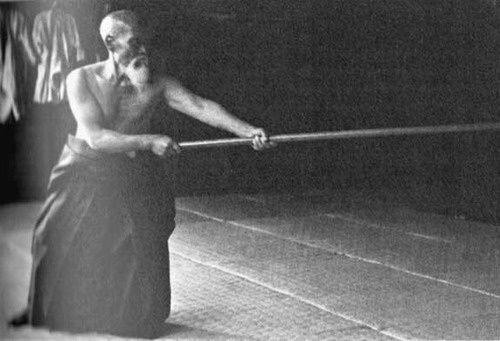

The martial arts forms suck argument has been going around the martial arts world for a long time. It states that traditional martial arts are rigid and spend too much time mindlessly following the choreographed forms passed down from antiquity, while a fight in real life is dynamic, unpredictable and spontaneous. The purpose in me writing this is not to totally lay to rest that argument because there are valid points to both.

That said, I do believe that there are good reasons to continue to practice forms. For starters, forms have combat tested moves within them BUT it is up to the motivation of the practitioner to unlock them. It is hard to balance keeping the knowledge alive for future generations, and then letting that commitment go to follow the current trends in fighting. Whether or not the two sides of the argument are right or wrong depends on the context in which we are living. So if you were a police officer I would recommend focusing more on the dynamic fighting part and less on forms. On the other hand, if you are looking for a healthy alternative to gym exercise and want a just little understanding of martial arts then forms are perfect for you. I think the problem comes in when you get confused as to what are your main objectives.
Currently, at this point in the US, violent crime has been decreasing since the 70’s. Sure, there are places where it is bad and it is up to you to understand that in your environment.  Moreover, your context can change for a number of reasons and if it does we have adapt our training accordingly. Currently, chronic disease and accidents top the list of causes of death, with murder not even making the top 10.  When I assess my environment I look at national trends and local ones. In my context, I just don’t see a danger by other humans. Does that mean I turn a blind eye and go on my merry way? Absolutely not, I think it is important to prepare for a possible violent encounter. I just do not think it is necessary to focus everything I do on it. So this is where forms come into play. Like I mentioned previously, the moves are there. So why not practice them to develop your body as a weapon, and in the age of steep cuts to Medicaid, use it to prevent chronic disease?  

Without a doubt, one of my favorite forms is the Aikido 31 Jo Kata. A “jo” is a Japanese term for a 55” long wooden staff. O’Sensei, who is pictured above holding a jo, created Aikido, a Japanese martial art that uses the flow of spiral energy and joint locks to redirect an opponent’s momentum. O’Sensei used the jo often and created some small sets, consisting of a few moves together. It is said that he developed his love of the jo from bayonet training he did during his service in the Russo-Japanese war.  He continued using the jo until he was a very healthy elderly man. His student Morihiro Saito created the 31 Jo Kata from the different sets O’Sensei passed to him. Here is a video of Morihio Saito performing the 31 Jo Kata.
 
I did Aikido intensely for two years starting 1995 until I got a wrist injury that interfered with my progress in Aikido. I moved to Tai Chi because of the healing benefits, but I really missed Aikido and kept the form in my practice. Despite my love of the 31 Jo Kata, I eventually forgot the moves after a few years. I always wanted to bring it back. I did keep a smaller set memorized and then one day I decided to study Morihiro Saito’s video and regain the form for my training. Now it is a major part of my practice.

I wanted to bring it back because I find that the jo form is beneficial in 5 ways: 
  1. Power 
  2. Fitness
  3. Riai 
  4. Self defense
  5. Fun

Power Doing forms, especially weapons forms, helps you develop proper body mechanics to build power. When you repeatedly strike and move from one posture to another you can work on your body mechanics, which helps you understand the rhythm of releasing power. A great example is let's say you had to break a down a door with a stick or shovel. There are postures in the jo form that follow the same kinetic chain needed to muster the power to accomplish that action. It is not the form that teaches you how to apply the moves, it is your imagination. I figured that one out and now when I practice the form my intent is totally different. Can you practice that move without the form? Absolutely, yes, but the question I would ask is will you. Hell, you might even forget it. The form keeps the postures alive for as long as people practice them, even if they are taught by someone who doesn’t understand them and is a terrible teacher.

Fitness Doing the form over and over again for an hour is a great workout and gets my heart rate beating really hard. I haven’t measured the VO2 Max of it but but I would say that is definitely qualifies as a high intensity cardiovascular exercise, which the CDC recommends you do 75 minutes per week, along with some whole body muscle strengthening exercise. Since the staff weighs about 1-2 lbs and you are swinging it at pretty good speeds, you are definitely strengthening your muscles. Just take a good long look at that picture of O’Sensei (above). He is around 80 years old in that picture. Additionally, there was a study done comparing middle-aged martial arts practitioners with sedentary people of the same age, and it found that the martial artists were healthier on a wide variety of measures.

Riai is a Japanese martial art term that means understanding of the core principles behind the mechanics of punching, joint locks, and throws in relation to weapons training. For example, if you practice yokomenuchi, an overhead strike to the side of an opponent's head, you can see that the mechanics of that strike can be done without a weapon, such as using a hammer fist strike. That same motion can be used in grappling and in a forearm block. The idea of forms is to use your imagination and partner practice to unlock these relationships and innovate other uses. To me this is the main reason to keep forms alive. The danger comes when we mindlessly practice these forms and then think mindless practice alone will help us overcome an attack, or worse when we think we are invincible simply because we practice them. This is why I think the argument against forms is important. It keeps us honest.


Self defense
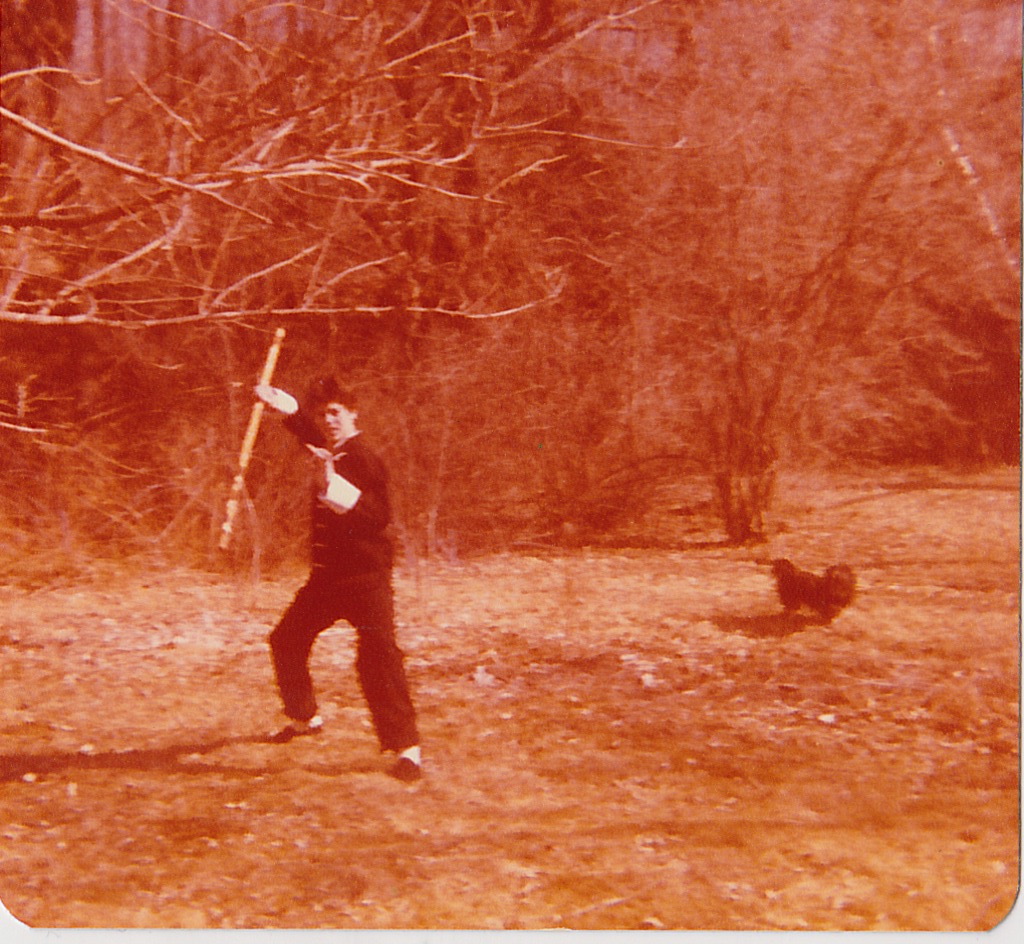
chris-kid-martialarts_0009.jpg
The author in his teens
First, check out this news story. It depicts a woman, who most likely had little to no self defense training, and probably less training with a weapon, fending off an attacker with a baseball bat. She got in some good hits, but she could have used some training to increase her effectiveness. The fact is a little training goes a long way. One could do forms with a little self defense application and in a dire situation be effective in deploying a weapon similar to the training weapon. There is no way that someone with little to no combative training can pick up a baseball bat and beat a competitive stick fighter, but if you have been working out with a staff for a while and a dog attacks you you would definitely have a better chance than someone with no training. I have been working out with weapons since the early 80s, and I can tell you honestly that I would not be able to compete in a stick fighting competition. But in the very rare possibility that I had to wield my staff to defend my family, I believe I am confident enough to dissuade any would-be assailant from continuing. In addition, a jo is first and foremost a common stick, which is ubiquitous in many environments from urban to rural. Sticks, pipes, and baseball bats can be readily found throughout the world, from India to Southern California. A stick is a feature of most environments.

Fun
Lastly, it is fun to move with a stick and develop your body at the same time. O’Sensei saw his jo practice as a sacred connection to the universe. I feel that same connection--it is kind of like a pantheistic dance partner! We all know that the more you see an activity as fun, the more likely you are to continue it. So I am counting on my love of the jo to increase my health, to decrease my health bills, and, if need be, to protect me in a dire situation.
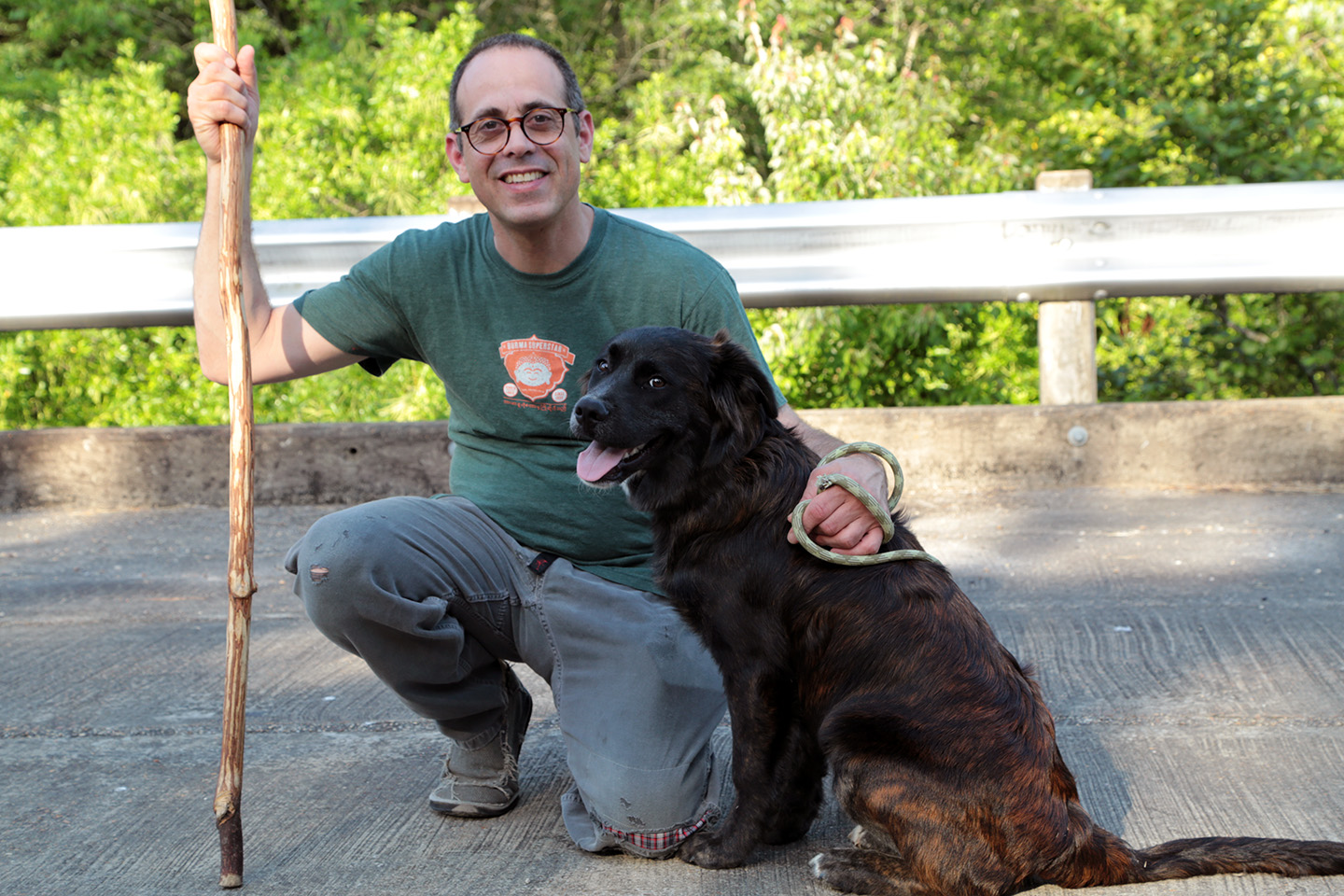
chris-n-chewy.jpg
The author pictured with his dog and walking stick

As the quote at the beginning of this post says, the most perfect actions echo patterns found in nature, and I believe that the moves collected in the 31 Jo Kata do just that. They echo patterns that are found in nature, while intrinsically embedding them inside you. You are learning how to develop power and when to release power. These are not the only parts of the equation if you want to learn to become a skilled fighter. But in my context, where self defense is not a high priority, practicing these forms helps in the pursuit of health and provides a small amount of security. But most of all, I do it because it is fun. It genuinely brings a smile to my face when I practice.


Friday, February 18, 2011

Sustainable Health Promotion

On February 2nd, Denise Stevens, the head of Matrix Public Health Solutions, the company that leads the Community Interventions for Health (CIH) project, was beamed into our classroom via Skype to present the CIH project strategy for chronic disease prevention. She laid out an extremely ambitious health promotion strategy that spanned 3 risk factors: tobacco, unhealthy diet, and physical activity; 3 countries: Mexico, India, and China; and 4 approaches: health education, social marketing, community mobilization, and structural change (Stevens, 2011).

The CIH intervention I think is the most emblematic of what it takes for sustainable health promotion is their tobacco reduction campaign in China, which has “smoking center inspectors” enforcing a city wide no-smoking ordinance. This one got my attention because not just anybody can waltz into China, a country that the WHO reports is “the world's largest producer and consumer of tobacco,” and establish an anti-smoking police force to enforce a CIH strategy. I had been studying sustainable health promotion for almost a decade, from WHO’s EPI to BRAC and including my own struggles with small-scale community health promotion. It seems I have never been able to grasp that elusive ingredient for sustainable health promotion. So here was someone drinking from the Holy Grail; I shot my hand up to ask, “how did you make that happen and who pays for it?”

It turned out that she knows the retired head of the Chinese version of the CDC and that the Pepsico foundation is a major funder behind CIH’s projects. She pointed out the prestige that comes from working with American partners is a bigger incentive for many of her international partners than money.

This funding and prestige revelation led me to research the Pepsico Foundation. Its goals and mission are in step with Pepsico’s own corporate mission and are found on the corporate website. CEO Indra Nooyi supports taking the lead in corporate responsibility and cultivating sustainability in the environment and health arenas (2010b). With Pepsico specifically in mind, I drew a concept map to illustrate the interaction between a corporation attempting to create a sustainable health promotion program in a globalized world and the communities it serves. With Pepsico’s war chest and corporate efficiency, they can fund community projects all over the world and gain access to academic and political elites “to help devise solutions to key global challenges” (Pepsico, 2010b). My map also shows the cycle of profits that fuel Pepsico, as their mission cannot be totally altruistic.

The hard truth is that health systems all over the world struggle to deliver primary care or health promotion, especially to the least fortunate (Frownfelter and Dean, 2006; Holman and Lorig, 2004). One of the main reasons for this is that the demand for secondary and tertiary care is less affected by price (Roberts et al, 2004). This means that when people are sick they are willing to pay whatever it costs to save their own life. This high demand creates a stable need for professionals and thus status becomes attached.

“Basic food” is another high demand commodity (Roberts et al., 2004 p. 164). There will always be a demand for food, and companies that control the food market are some of the richest and most powerful. Ironically, many of their products are partly responsible for exacerbating the prevalence of some chronic diseases.

In contrast, health promotion, and even primary care are extremely price sensitive and do not generate the high revenues like acute care services (Roberts et al., 2004). Simply put, people in general don’t value something that may prevent possible future costs and are less willing to create a demand for those services. This is why I believe that corporations are better poised to deliver health promotion. The new trend in corporate responsibility and sustainability provides the funding, visibility, and sustainability for health promotion in ways that other entities cannot support. Thus, it is important that we in public health can see this as an opportunity to develop public-private partnerships to ensure that such corporate campaigns deliver the right information.


References

Frownfelter, D., Dean, E. (2006). Cardiovascular and pulmonary physical therapy evidence and practice. St. Louis, Missouri: Mosby Inc.

Holman, H., Lorig, K. (2004). Patient self-management: a key to effectiveness and efficiency in care of chronic disease. Public Health Reports, 119:239-243.

Pepisco. (2010a). Corporate fact sheet. Retreived on . Retrieved on February 6, 2011 from www.pepsico.com/Download/PepsiCoCorporateFactSheet.pdf

Pepisco. (2010b). Letter from Indra Nooyi. Retrieved on February 6, 2011 from http://www.pepsico.com/Purpose/Performance-with-Purpose/Letter-from-Indra-Nooyi.html

Roberts, M. J., Hsiao, W., Berman, P., Reich, M.R. (2004). Getting Health Reform Right: A Guide to Improving Perfomance and Equity. New York, Oxford University Press.

Stevens, D. (2011). A systems oriented solution to a complex public health problem. [PowerPoint slides] Retrieved on February 19, 2011 from Simon Fraser University webct http://webct.sfu.ca/webct/cobaltMainFrame.dowebct?appforward=/webct/viewMyWebCT.dowebct

WHO. Towards a tobacco-free China. Retrieved on February 16, 2011 from http://www.wpro.who.int/china/sites/tfi/

Tuesday, January 06, 2009

Why I Chose a Career in Public Health....

When I re-entered University at age 39, my purpose was to get a better job in the health-care field. My top choices were physical therapist, psychological counselor, or acupuncturist. During my first semester I began to see that physical therapy was much like a car mechanic and that the daily work would be fixing people's knees and other parts that were broken and, most importantly, that PTs don't have as much autonomy as I'd like. The doctor diagnoses the injury and prescribes the regime. I was much more interested in the mind's role in healing and prevention. In psychological counseling the therapist works with patients on a number of behavioral issues, not just physical health. I began to research health psychology. Around the same time, I found some studies on acupuncture that questioned its ability to heal any disease, and there was no real emphasis on prevention. After many years of studying Taoist healing practices that focus more on prevention than acute repair, I wanted to help prevent disease from beginning in the first place.

Near the same time, a friend passed on a book entitled The Status Syndrome by Michael Marmott. In it the author explained that diseases manifest themselves in a population differently with regards to social class. People at the top of the social hierarchy live longer than people at the bottom, including the radical discovery that people with PhDs generally live longer than people with a Master's degree and right on down the line. The issues raised in that book caused me to have a spiritual crisis and led me to pursue a career that relies less on religious faith and more on personal empowerment and education. It also sparked a strong desire for discovering an empirical basis to substantiate claims about efficacious healing practices.

In addition, I grew increasingly frustrated about our western health system, which is based on a model designed to combat acute trauma and infectious diseases. Unfortunately, that model is ineffective in preventing non-communicable diseases (NCDs) because they are about lifestyle choices made by the individual, heavily influenced by cultural norms and pressures.

The western medical system approach is top-down, meaning that doctors tell patients what to do. Because of medical advances over things like bacteria—which have been great in reducing infectious diseases and the burden of those on hospitals and communities—doctors and the medical establishment have been given too much power over areas where they are not particularly effective. This kind of power has a tendency to narrow people's vision, so that the current model is excessively preoccupied with physiology and the view that everything is biologically determined. So the focus is on high-ticket items like surgery rather than cost-effective, preventative, lifestyle changes.

For non-communicable diseases such as cardiovascular disease and diabetes, the need is greater than ever to create a system that can raise awareness and motivate people to change high-risk behaviors. This approach aims to keep people out of the hospital for things like heart surgery by keeping them healthy in the first place.

This is why I look to other, decentralized health systems as a model for dealing with education and prevention issues. Systems like those at various times in Bangladesh, Cuba, Pakistan, the state of Kerala in India, China, and the parts of the Philippines have designated roles for ordinary people to become community health educators. These people function as disseminators of information to rural regions where doctors are unable to access. These decentralized systems accomplish two amazing things. First, the distribution of medical knowledge creates a less hierarchical system in which more people can share in the decision making process. Second, and most important, these community educators more easily reach marginalized groups, which often have a heavy burden on healthcare systems. Using education programs between people who are on the same status level is an effective tool alongside a top-down authoritarian approach.

When it comes to many diseases—particularly non-communicable ones—awareness is an essential ingredient in preventing a disease from becoming a major player mortality rates. And so much of maintaining good health is about having access to information. For example, we are seeing a reduction of cigarette smoking in developed countries because more people in those places have become educated about the overwhelming evidence about the dangers of cigarette smoking. In less developed countries, there has been an increase in smoking because those places have not been able to enact effective campaigns about the ills of cigarette smoking. But in due time, we will see a reduction in cigarette smoking in those places, too, as health education systems have time to catch up. As with cigarette smoking, condom usage, diet, exercise, clean water and clean hands, many other preventative behaviors can also be taught and learned.

All these issues combined to lead me to a degree program in public health, with an emphasis on non-communicable diseases. For me, public health can be the “ounce of prevention [that] is worth a pound of cure.”